I prefer to forage for wild edible crops. I began with the leafy inexperienced aerial components of crops. Then I realized to gather and course of seeds. Finally, I spotted that among the most protein and carbohydrate wealthy components have been underground. However to achieve them, I needed to be taught to make use of a digging stick.
A digging stick is a conventional software normally constituted of a single stick. The stick is used whereas kneeling or sitting to dig into the bottom. Sizes (and makes use of) differ. However general-purpose digging sticks are about 3-4 ft (1 meter) lengthy and about 1 inch (2.54 cm) thick. The stick normally has a pointed finish, however many have a chiseled profile.
Don’t scoff on the digging stick! A digging stick could also be more practical in laborious or sun-baked soil than a shovel. You take away and elevate much less filth with a digging stick than with a shovel. And you aren’t lifting giant quantities of soil together with your again. This equates to much less effort to extract a bulb or root.
I actually discover this true when utilizing a trowel to dig for underground components of crops. With a trowel, I must loosen the filth after which lever it up for removing. Utilizing a digging stick is much less work.
The Digging Stick in California
Amongst native peoples, the digging stick had many makes use of. Digging sticks have been used to reap roots, bulbs, and corms in addition to dig ovens, postholes, and even graves.1
The digging stick was important for acquiring plant meals sustainably. Digging sticks aerate the soil as you dig. In addition they break off small items of roots, corms, and rhizomes. This helps to resume the useful resource as you harvest it.
In some ways, the digging stick is superior to the instruments of recent agriculture. Native Californians gently dug and maintained pure “gardens” with out damaging plows, fertilizers, herbicides, and pesticides.
Historically, digging sticks have been utilized by girls, who did the vast majority of the foraging and gathering. However don’t let this deter you from utilizing one! My masculinity is under no circumstances diminished once I use a digging stick. I take satisfaction in utilizing a digging stick properly. And I’m normally excited to make use of the software to get at wild edible meals.
Supplies for California Digging Sticks
Conventional digging sticks in California have been normally crafted from hardwood. Mountain Mahogany (Cercocarpus betuloides) was a favourite materials. Additionally used was manzanita (Arctostaphylos sp.), oaks (Quercus sp.), Catalina Ironwood (Lyonothamnus floribundus), and Toyon (Heteromeles arbutifolia). Buck brush (Ceanothus cuneatus) and Serviceberry (Amelanchier sp.) have been additionally used for digging sticks.
The Chumash of southern California generally connected polished stone rings to present their digging sticks added weight.1
Make a Digging Stick
As soon as a digging stick is lower, it’s normally fire-hardened. This may be carried out in numerous methods. It may be held over the fireplace. Or, the tip will be buried within the sizzling ashes of a fireplace (this excludes oxygen and retains the wooden from burning).
The aim of heating the stick is to drive away moisture. This makes the wooden more durable and denser. It’s analogous to tempering metal.
The Chumash held the tip held in a hearth after which lower it to some extent. They then held it within the hearth once more. Afterward, they soaked the tip in water earlier than holding it within the hearth a last time.1
I sharpen the stick earlier than fire-hardening. And as a substitute of a pointed finish, I favor a wedge form like a contemporary chisel or crowbar. The form permits me to dig with the sting in addition to lever-out a clod of soil. I do that so I can confirm the bulb I’m accumulating is connected to the stem that drew my consideration. It is a secure apply for harvesting underground plant components when there are lots of species of crops rising collectively.
The Underground Elements of Crops
The underground components of crops are sometimes neglected. However they include among the highest concentrations of carbohydrate and protein of any plant components. You should utilize a digging stick to reap tubers, bulbs, rhizomes, corms, and taproots.
Some you may eat uncooked. However most ought to be boiled, steamed, roasted, or baked in ovens. Many should be cooked to take away toxins or dangerous chemical compounds. For instance, Camus incorporates Inulin.2 Consuming an excessive amount of inulin may cause nausea, bloating, and flatulence. Giant portions of inulin may also scale back how a lot sugar and ldl cholesterol the physique absorbs. Cooking reduces the quantity of this polysaccharide.
Perennial wildflowers with underground storage organs develop all through California. And so they have been an necessary supply of meals for almost each group of Native Californians. There may be little within the archeological file about consumption of underground plant components as a result of mushy components don’t persist. However the botanist V.Okay. Chesnut (1867 – 1938) recorded that the Indians of the Mendocino space appended the phrase, “bo”, to the names of crops to indicate the edible bulb, corm, or tuber of that plant.2 This means the significance connected to those meals.
These crops usually have vegetative replica utilizing their underground components. This enables them to outlive and reestablish in place after human disturbance. Native peoples would replant small roots, cormlets, and bulblets to make sure a continuous provide of the useful resource into the long run. You need to do the identical everytime you harvest underground components of untamed crops
Security
There may be extra data required to soundly harvest and devour wild crops than I can put on this article. You should be capable of determine the plant, know what components are edible, know when to reap the plant, and the best way to safely course of the plant. You should additionally be capable of consider the rising web site to find out whether or not it’s suitable for eating the plant.
Don’t harvest and devour wild edible crops until you’ve got this information.
Crops in California with Edible Underground Elements
Here’s a checklist of crops with edible underground components which might be generally present in my space of California. You need to do analysis to find these in your space. Your analysis ought to embody studying in regards to the processing essential to make the components suitable for eating.
As well as, be taught which crops are frequent and that are threatened or endangered in order that you don’t denude the panorama. There are edible species that I select to not harvest as a result of they’re already threatened by habitat loss.
Listed here are some edible crops in my space of northern California. Notice that I make no point out of the processing required to make them secure.
Bulbs
Brodiaea (Brodiaea sp.) – Bulb
Camas (Camassia quamash) – Bulb
Cat’s Ear (Calochortus tolmiei) – Bulb
Ithuriel’s Spear (Tritteleia laxa) – Bulb
Leopard lily (Lilium pardalinum) – Bulb
Lewis’ lomatium (Lomatium triternatum) – Bulb
Mariposa lily (Calochortus maweanus) – Bulb
Ookow (Dichlostemma congestum) – Bulb
Soaproot (Chlorogalum pomeridianum) – Bulb
Wild hyacinth (Dichlostemma multiflorum) – Bulb
Wild onion (Allium sp.) – Bulb
Yampa (Perideridia sp.) – Bulb
Corms
Blue Dicks (Dichelostemma pulchellum) – Corms
Rhizome
Roots
Taking pictures Star (Dodecatheon clevelandii) – Roots
Different Makes use of for a Digging Stick
Digging sticks have been utilized by Native Californians for different functions apart from harvesting edible crops. They have been used to dig roots for basketry. They have been additionally used to dig earthen ovens and postholes for shelters and fences. They have been even used to dig graves.
An uncommon use of a big digging stick was to gather angleworms, that are edible. After rain made the soil moist. A big digging stick was thrust into the bottom to a depth of about one foot. It was stirred round to agitate the earth. Worms would then floor in giant numbers for a radius of two to 3 ft.1
Use a Digging Stick
Some time again, I took a wild edible and medicinal plant class given by an area college. We had a particular allow to reap a small variety of wild crops from federal land for academic use. I had used a digging stick earlier than, however my classmates had not. It was stunning to see how a lot problem that they had with it. Many have been awkward and ungainly as they used a digging stick for the primary time. Watching them battle is what spurred me to put in writing this text.
The brief reply for the best way to use a digging stick: Use a digging stick in no matter method feels snug for you. Individuals (and digging sticks) are available quite a lot of sizes and styles. The trick is to discover a grip and a movement that appears pure and environment friendly.
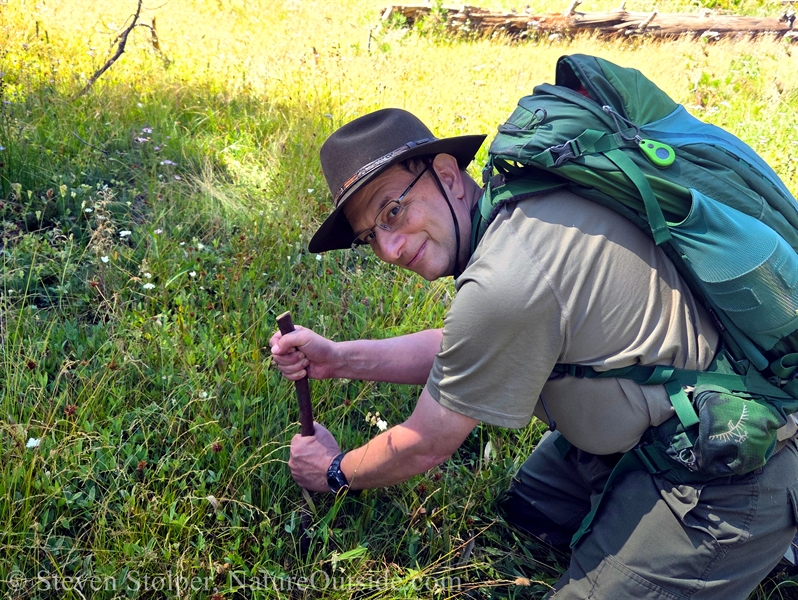
I grasp the digging stick about 8-10 inches above the purpose with my left hand. I grip the digging follow my proper hand (my dominant hand) 12-18 inches above my left. You’d suppose it greatest to have your dominant hand because the decrease one, however doing this feels “bizarre” for me. I discover it pure to have my dominant hand on high.
Native peoples have been noticed holding digging sticks in the way in which that I do. However I exploit this grip as a result of it feels pure for me. I’m wondering if it feels pure for organic causes or cultural ones. As a result of, if you concentrate on it, my grip is much like the way in which Individuals maintain a baseball bat. And we’ve been holding bats since we have been younger youngsters.
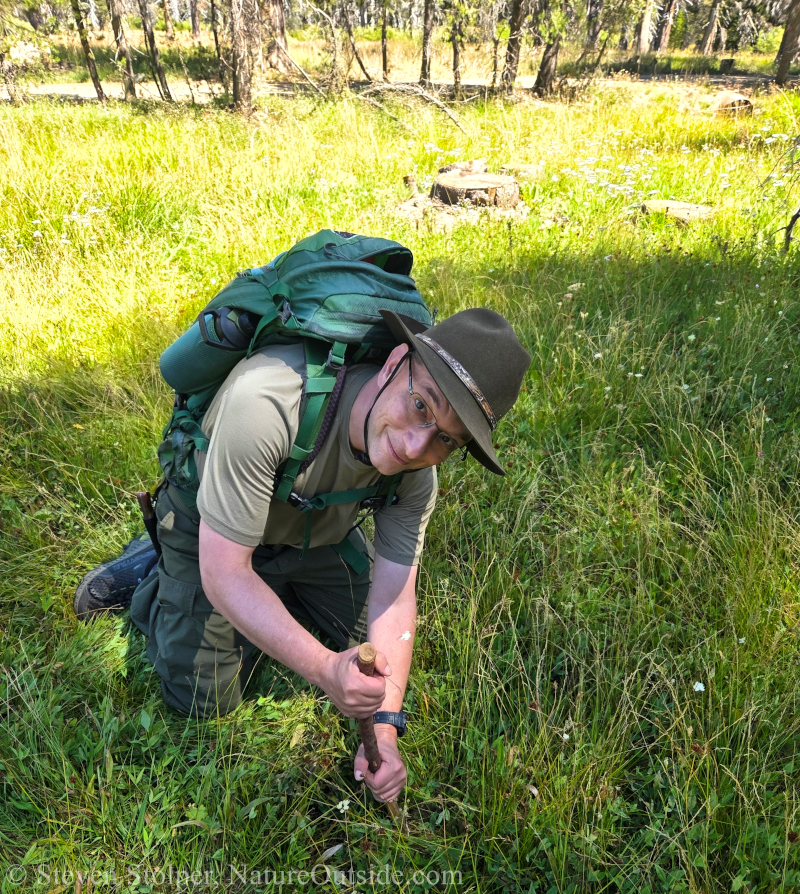
I maintain the digging follow my proper (dominant) hand on high.
To make use of the stick, I thrust it into the bottom and draw it in the direction of me. It’s remarkably like a paddling movement. Notice that I’m not exerting myself or attempting to generate plenty of power. I’m working with a rhythm and at a tempo I can keep all day.
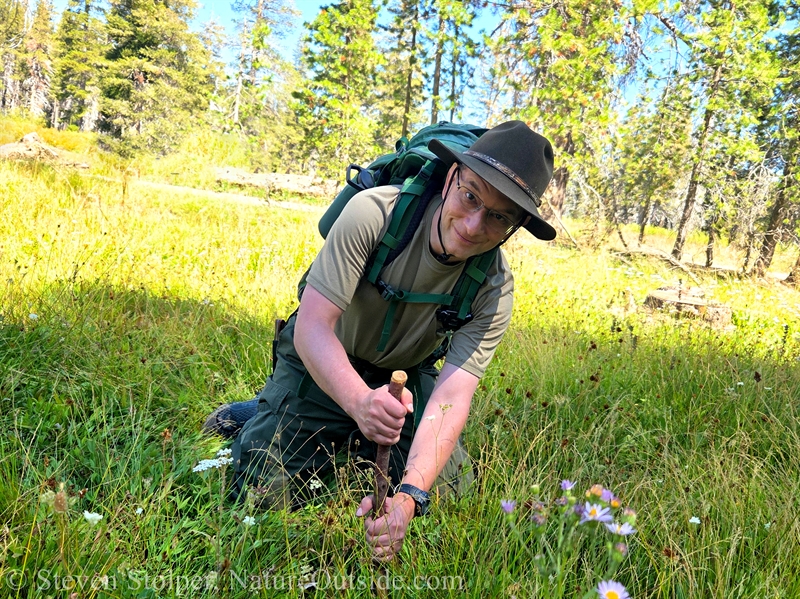
I draw the stick towards me utilizing a “paddling” movement.
The Ethics of Utilizing a Digging Stick
It seems that Native Californians had guidelines to have the ability to harvest giant portions of edible crops whereas perpetuating their populations:2
Spare particular person crops to permit future manufacturing
Harvest after seed-set to make sure that seeds fall on the web site
Dig bulbs and corms in order to disperse bulblets and cormlets that can mature into future crops
Replant bulblets and cormlets
Go away a decrease part of the tuber
Weed round favored crops
Burn areas by which the crops develop to scale back competitors and recycle vitamins
We dwell within the fashionable world. And we must always have our personal ethics when harvesting wild crops.
Many of those crops at the moment are unusual. Habitat destruction from improvement, agriculture, and ranching have decimated populations of as soon as frequent crops. As well as, there is no such thing as a tending (together with burning) by indigenous peoples to assist propagate the species. In consequence, lots of the wildflowers with edible underground components are threatened and develop solely on protected public lands.
In consequence, I hardly ever use a digging stick. I don’t want to destroy crops which might be turning into more and more uncommon when my survival doesn’t rely upon it.
My answer has been to develop many of those crops myself. Usually I develop them in containers on my patio, which provides me the good thing about observing them all through their lifecycles.
At all times adjust to native legal guidelines and laws. However extra importantly, use restraint and sound judgment when deciding in case you ought to harvest the underground components of crops.
Use your digging stick correctly. And at all times be a great steward for nature.
References
Survival Abilities of Native California
Tending the Wild
Associated Articles on NatureOutside
Yampa Romping
The Foragers Feast
Get Yummy Sunflower Seeds from Wild Crops
For enjoyable information and helpful ideas, be a part of the free NatureOutside Publication.