Off The Grid Tenting, Climbing & Backpacking, Climbing Gear, Shelter, Wilderness Survival
Mild backpackers and hikers are sometimes obsessive over their pack weight and continuously run into robust choices on the subject of shelter. Whereas constructing natural-material shelters like particles huts or lean-tos is a invaluable ability, there are many conditions the place appropriate branches, leaves, or bark are scarce—suppose excessive alpine zones, deserts, or dense forests with younger timber. In these instances, going with none shelter can flip harmful quick, particularly if dangerous climate rolls in unexpectedly. You want one thing fast, dependable, and packable to get out of the weather.
That is the place a superb tarp shines as an important piece of drugs.
Relating to tenting, mountain climbing, and survival, a tarp is among the most versatile instruments you possibly can carry. Tarps are light-weight, compact, sturdy, and extremely adaptable. They are often configured into dozens of shelter designs to match rain, wind, solar, chilly, and even bugs (when paired with extras like netting). A high quality tenting tarp is commonly each lighter and cheaper than even the lightest ultralight tents, making it a favourite amongst thru-hikers, ultralight fanatics, and preppers.
In my expertise, tarps supply benefits that make them way more interesting than tents for gentle hikers who prioritize minimal weight with out sacrificing functionality.
Why Tarp Shelters make a superb shelter for tenting, mountain climbing, and survival
There are a number of the reason why we maintain tarps as a part of our gear assortment:
Tarp shelters present stable protection in opposition to rain, wind, solar, and even gentle snow or hail. They’re one of the crucial reasonably priced methods to remain dry and cozy within the backcountry. Throughout heavy downpours, establishing a tent in pouring rain is a depressing, fumbling ordeal that soaks your gear and sleeping bag. Constructing a pure shelter can take hours and nonetheless leak. A great tarp, against this, may be deployed in below 60 seconds—tie a ridgeline between two timber or use trekking poles, stake the sides, and also you’re protected. This velocity is a lifesaver in sudden storms or while you’re exhausted. Tarps additionally excel at reflecting warmth from a small fireplace positioned in entrance, turning a chilly night time into one thing manageable with only a little bit of mirrored heat.
Versatility Few items of drugs match a tarp’s adaptability. With simply paracord (and even shoelaces in a pinch) and a few stakes or rocks, you possibly can create setups for every little thing from open-air lounging to completely enclosed windproof shelters. Tarps work in forests with timber for ridgelines, open plains with trekking poles, or rocky areas utilizing pure anchors. They’re nice as floor cloths, rain catchers, gear covers, and even emergency alerts. In survival mode, a tarp turns into a multi-tool: shelter, camouflage, water assortment, or wind block. This flexibility makes it a wise backup when pure supplies are unavailable or when you have to adapt to altering circumstances quick.
Light-weight Tarps win hands-down on weight. An ultralight silnylon or Dyneema tarp (typically 8-12 oz for a solo measurement) is dramatically lighter than most backpacking tents, even the featherweight fashions. This saved weight helps you to carry extra meals, water, or different necessities with out punishing your again. For long-distance hikers or these bugging out on foot, each ounce counts—tarps assist maintain your base weight low whereas nonetheless offering actual shelter.
Value-Efficient Tarps are budget-friendly. You will get a stable, sturdy tarp for $20–$100, in comparison with $200–$600+ for a comparable light-weight tent. Many tarps double (or triple) as floor sheets, emergency blankets, or gear tarps, stretching your greenback additional. Pair one with an inexpensive hammock for elevated sleeping, and also you’ve bought a whole system that’s far inexpensive than fancy tent setups. In survival or off-grid eventualities, affordability means you possibly can afford multiples—one in your pack, one in your car, one stashed at house.
Disadvantages and When to Select a Tent As an alternative
Tarps aren’t excellent. They provide much less bug safety than tents (no built-in netting or flooring), so mosquitoes, ticks, or spiders may be a problem in buggy areas—pairing with a bivy sack or web tent fixes this however provides weight. They require extra ability to setup successfully in wind or rain; a poorly set tarp can flap, sag, or leak. Condensation can construct up greater than in a double-wall tent, and so they present much less privateness for some folks. In excessive storms with excessive winds and driving rain, a totally enclosed tent may maintain up higher. If bugs, ease of setup, or most weatherproofing are priorities, a tent may very well be the higher major shelter—however a tarp nonetheless makes a wonderful light-weight backup or fair-weather choice.
Tarp Shelters: A Fast Historical past from Historic Necessity to Fashionable Survival Important
At OFFGRID Survival, we’re all about gear and abilities which have confirmed themselves over time—stuff that truly works when the grid’s down, the climate turns ugly, and also you’re miles from wherever. Tarp shelters match that problem completely. They’re not some stylish; they’re simply an evolution of what folks have been doing for 1000’s of years to remain alive outside.
Method again in historic occasions—suppose prehistory by way of early civilizations—folks didn’t have entry to fancy tents. They used no matter that they had: animal hides, woven reeds, bark sheets, or crude fabric to throw over a body or lean in opposition to a tree. These primary coverings blocked rain, wind, and solar whereas hunters, nomads, and early vacationers moved by way of harsh environments. Easy? Sure. Efficient? Completely. The core concept— a conveyable, waterproof sheet you possibly can rig wherever—hasn’t modified.
Quick ahead to the 1400s–1600s and the true “tarp” story kicks off on the excessive seas. Sailors coated heavy canvas with pine tar (thus “tar-paulin”) to make it waterproof. These tarps lined cargo, protected hatches, and doubled as emergency shelters throughout storms or after they made landfall. Light-weight, robust, multi-purpose—precisely the type of equipment we nonetheless attain for at this time.
By the nineteenth and early twentieth centuries, militaries worldwide adopted tarps exhausting. Troopers used them to cowl wagons, provides, artillery, and as discipline shelters. Throughout World Battle I and II, difficulty gadgets included rubberized groundsheets that doubled as rain capes, shelter halves (two may button collectively right into a pup tent), and full tarps for every little thing from lean-tos to improvised command posts. Within the Pacific theater, Allied troops (particularly Aussies) ran “hootchies”—tarps rigged as patrol-base overhead cowl to beat the rain and solar. That very same improvised mentality is alive and properly in trendy survival coaching.
Submit-war, as civilian tenting and backpacking exploded within the Fifties–Seventies, heavy canvas military tents gave technique to lighter choices. Low cost plastic “blue tarps” grew to become the price range selection for hunters, fishermen, and early ultralight hikers who needed to ditch weight with out shedding safety. They have been ugly, noisy, and heavy in comparison with at this time’s stuff, however they bought the job carried out when pure particles wasn’t an choice.
The true game-changer hit within the Eighties–2000s. Ultralight backpacking legend Ray Jardine pushed tarp methods exhausting in his PCT thru-hiker guides, proving you could possibly go lighter and quicker with a well-pitched tarp than most tents. That sparked an entire wave: GoLite, Mountain Laurel Designs, Zpacks, and others began cranking out silnylon and later Dyneema (DCF) tarps that weighed ounces as an alternative of kilos. Immediately, tarps weren’t only a backup—they have been the first shelter for severe long-distance hikers, thru-hikers, and minimalist preppers.
In the present day you see tarp shelters all over the place within the survival world: on bushcraft channels, in Alone contestant builds (long-term A-frames and enclosed setups), in navy SERE coaching, and in each severe off-grid bug-out bag. Why? As a result of they ship what issues most—light-weight, reasonably priced, ridiculously versatile, and bombproof when you know the way to pitch them proper.
Selecting the Proper Tarp for Mild Climbing and Survival
Search for tarps in supplies like silnylon (silicone-impregnated nylon—gentle, packable, waterproof) or Dyneema DCF (ultra-light, super-strong, however pricier). Keep away from low cost blue poly tarps for major use—they’re heavy and noisy. Dimension issues: 8×10 ft or 10×10 ft provides versatility for one individual (with gear area), whereas bigger works for 2. Grommets each 2–3 ft alongside edges permit extra pitch choices. Hydrostatic head score of two,000mm+ ensures actual waterproofing. Ultralight choices weigh below 10 oz; survival-focused ones (thicker, insulated) add ounces however deal with abuse higher. Check setups in your yard earlier than hitting the path.
Important Gear for Tarp Shelters Past the tarp:
Paracord or guyline (50–100 ft)—robust, light-weight for ridgelines and guylines.Stakes (6–12 titanium or aluminum)—for anchoring edges. Rocks work in a pinch.Trekking poles—excellent adjustable helps when timber are scarce.Groundsheet (polycro or Tyvek)—retains moisture and grime out.Optionally available: bug web/bivy for bugs, additional twine for superior pitches.
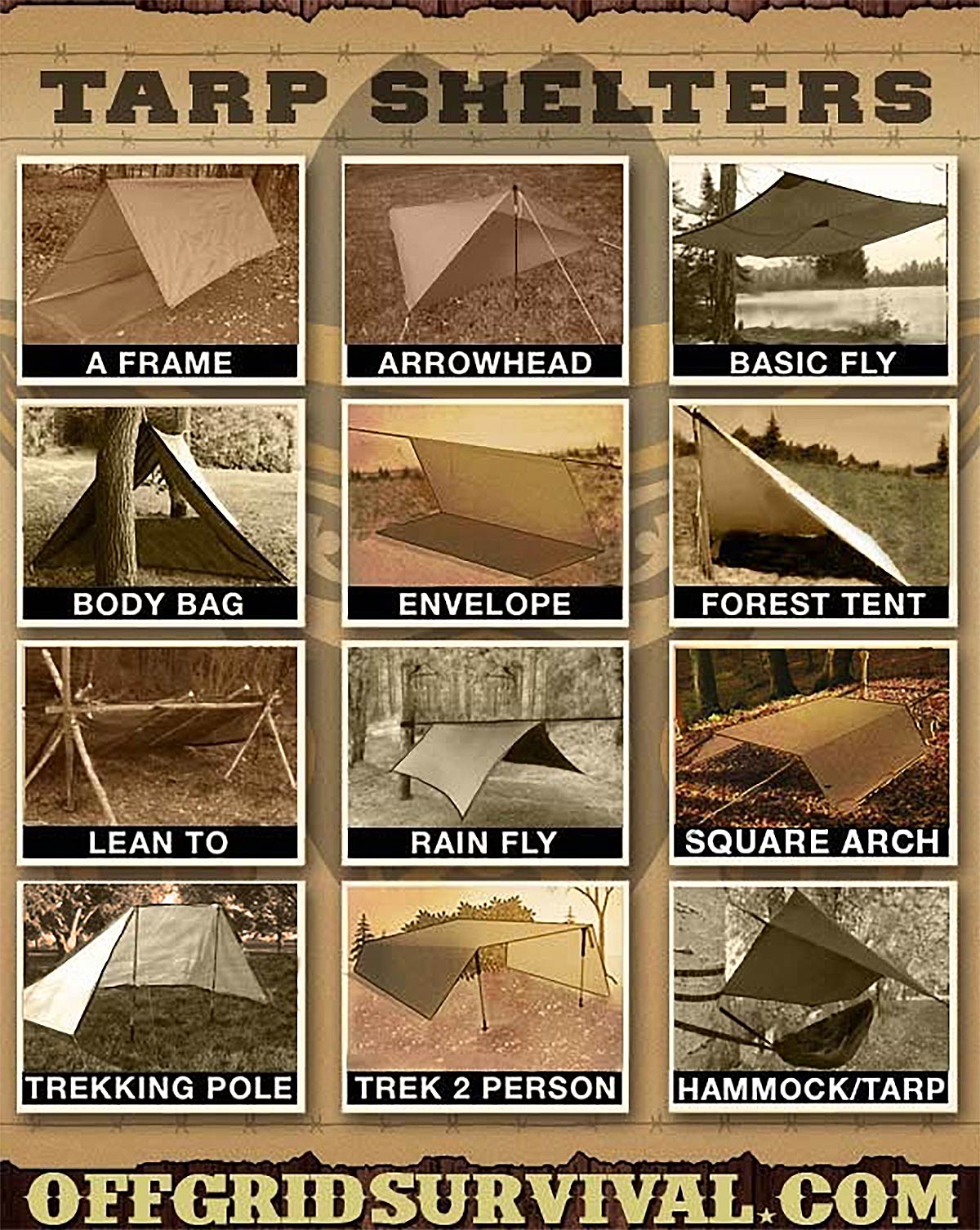
Forms of Tarp Shelters
A-Body Tarp Shelter
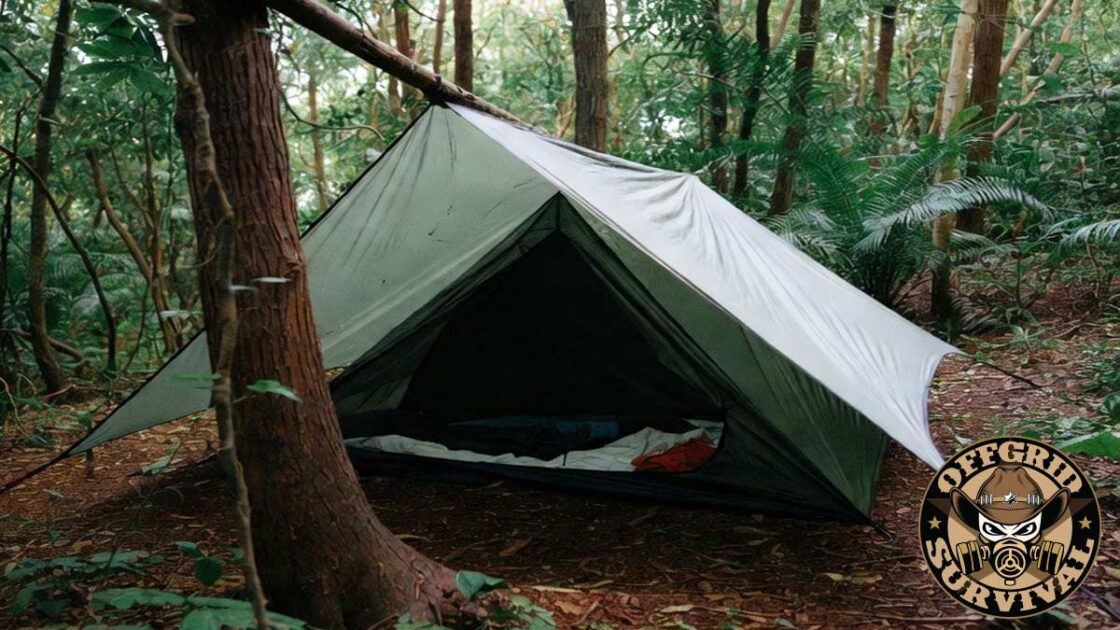
The basic go-to for balanced safety. String a ridgeline between two timber (or use poles), drape the tarp over it to kind an “A” form, then stake the perimeters down with rocks or stakes. This sheds rain and wind properly, offers good headroom for sitting, and covers gear. For additional safety, shut one finish by pulling it taut or including a again wall. Nice for reasonable climate; simple for rookies.
Lean-To Tarp Shelter Ideally suited for windy circumstances or when wind comes from one route. Tie one lengthy edge excessive to a tree or pole, angle the tarp right down to the bottom, and stake the underside edge. It creates a slanted roof that blocks wind and rain whereas leaving one aspect open for fireplace heat. Add aspect partitions by folding corners or utilizing additional twine for higher enclosure. Fast to arrange and customizable—excellent for brief stops or while you need an open entrance.
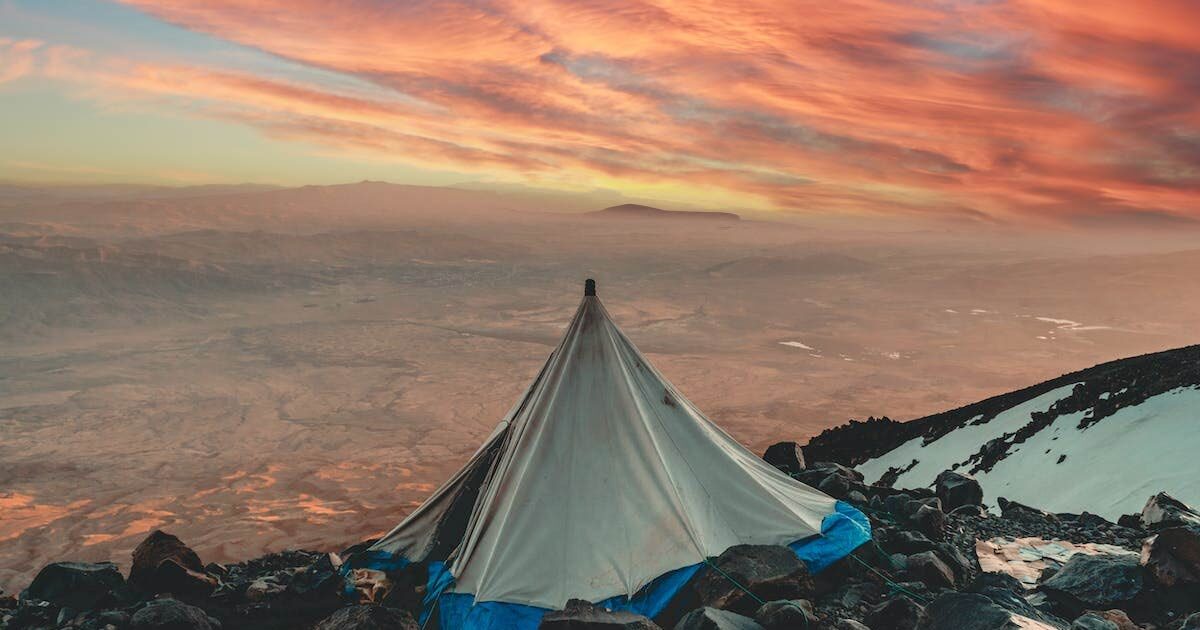
Teepee (or Tipi) Tarp Shelter Nice all-around for variable climate. Collect corners to a central level (tie to a pole or hanging twine), stake the bottom edges out to kind a cone. This offers 360-degree protection with good headroom and wind resistance. Depart a door flap open for entry/fireplace. Wonderful in open areas with out timber; displays warmth properly from a central fireplace.
4-Level (or Flat) Tarp Shelter Tremendous versatile for calm or sunny circumstances. Tie every nook to timber or stakes to create a taut, flat cover. This maximizes lined space for cooking, gear storage, or group use. Low-pitch it for rain shedding or excessive for air flow. Works properly as a “porch” extension over a hammock or tent.
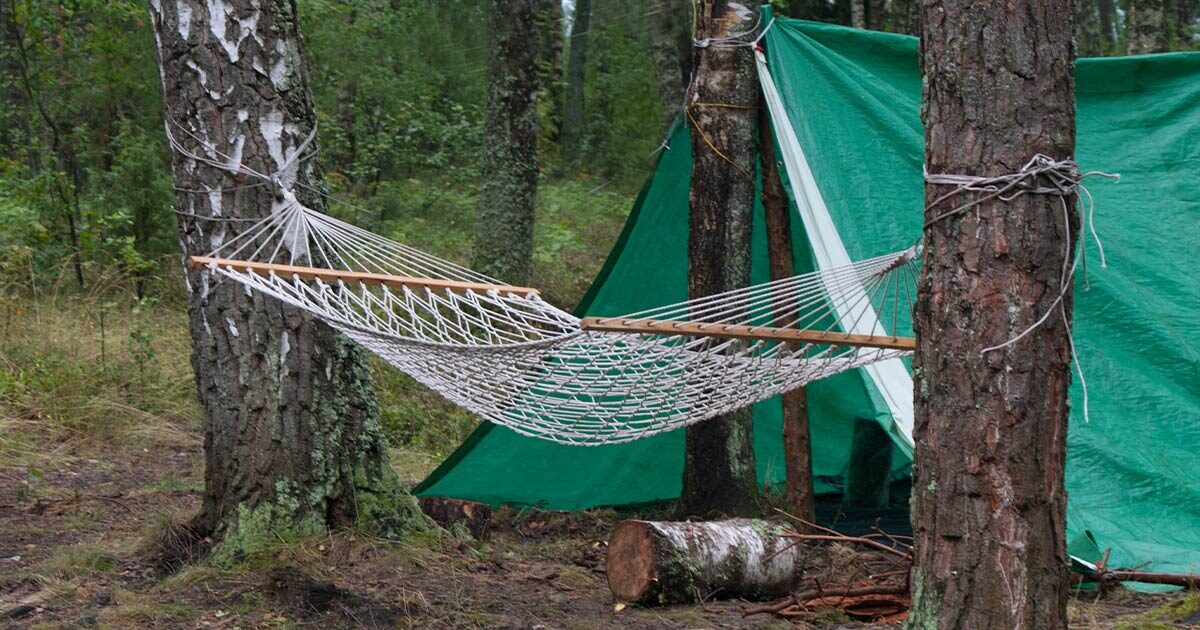
Hammock Tarp Shelter For hammock sleepers, connect the tarp above the hammock as a cover (A-frame or uneven pitch works greatest). It shields from rain, wind, and solar whereas conserving you off the bottom. Customise top for higher airflow or decrease for storm safety. A game-changer in buggy or moist areas the place floor sleeping isn’t superb.
With simply paracord and a tarp, you possibly can improvise numerous shelters—many in below a minute—that maintain you dry, heat (with a mirrored fireplace), and guarded. Experiment with variations just like the C-Fly Wedge (for wind) or Closed-Finish A-Body (for max rain block). In survival conditions, tarps offer you choices when nature doesn’t cooperate.
With a small quantity of paracord and a tarp, you possibly can shortly arrange an improvised shelter that can maintain you dry and heat with a small mirrored fireplace.
Tarp Shelter Configurations