

Revealed March 26, 2026 05:05AM
Check out the present snowpack map on the West Coast, and also you’ll see an entire lot of crimson. The Klamath basin in northern California is at present at 6 p.c of the 30-year median snow-water equal (SWE), a measurement of the quantity of water in a snowpack. The Willamette and Deschutes basins in Oregon are at 13 and 17 p.c, respectively. The southern reaches of the Sierra and northern reaches of the Cascades are faring higher, round 70 p.c, however sustained day by day highs within the 60s imply that what’s there may be melting quick.
All this comes as northbound Pacific Crest Path thru-hikers are on the point of start their journeys, and part hikers and southbounders are planning their summer season journeys.
“It’s been a historic season, and never in sense,” says Matt Warbritton, supervisory hydrologist for the USDA’s Oregon Snow Survey Program.
Because the West braces for what’s prone to be a scorching, dry summer season, right here’s what PCT hikers have to know.
Snowpack is Melting Shortly
Kennedy Meadows is at all times an inflection level for northbound PCT thru-hikers. The small group marks the top of the 700-mile desert part and the start of the Excessive Sierra. Hikers flip their consideration to high-elevation snow circumstances as they head towards the path’s highest level, Forester Move, a mere 75 miles forward.
For almost all of northbound thru-hikers arriving at Kennedy Meadows in late Could or early June, the circumstances forward shouldn’t be too daunting. Because it stands now, SWE within the southern Sierra is at 66 p.c of median, with a robust downward pattern as heat temperatures proceed an early soften.
“Once we discuss backpacking, it’s gonna be regional, however the backside line is that it’s all coming off shortly proper now,” says Andy Reising, Supervisor of the Snow Surveys and Water Provide Forecasting Unit on the California Division of Water Sources. “Whereas we usually peak and see the runoff after April 1, this 12 months, the vast majority of it’s coming off a month or 5 weeks early.”
For southbound thru-hikers starting on the northern terminus in Washington, the story is analogous.
“From October by way of February, this winter has ranked because the third warmest water 12 months on file for Washington going again to 1895,” says Karin Bumbaco, deputy state climatologist on the College of Washington. “It’s been actually heat, and we’ve seen again and again, possibly there’s first rate precipitation, but it surely’s not falling as snow within the mountains.”
The seasonal outlook for this spring exhibits extra of the identical: excessive possibilities of above-average temperatures and below-average precipitation within the Pacific Northwest. Hikers starting their journeys south in June ought to count on some snow within the excessive elevations of the North Cascades, however on the entire, the path ought to be satisfactory to most hikers by the early summer season.
“Proper now, we’re trending fairly near what 2001 appeared like by way of our snowpack,” Bumbaco says. “In that 12 months particularly, on common for Washington state, we had been melted out by early June.”
Rivers are Rising Quick—and Peaking Early
One other issue to contemplate on any PCT hike is water ranges in backcountry streams and rivers that lack bridges. Drownings from water crossings are one of many main causes of loss of life on the path. River ranges in wilderness areas like Glacier Peak in Washington and Yosemite Nationwide Park in California can fluctuate broadly each day and even hour to hour relying on climate.
This 12 months, as a result of low snowpack and quick soften up and down your complete West, observers count on river ranges to peak and fall earlier than most hikers are even on the path.
“The California-Nevada River Forecast Middle is predicting the height flows for lots of the central and southern basins can be in regards to the finish of March,” Reising says. “The flows will doubtless be reducing after April 1, which is so much sooner than different years.”
Bumbaco expects an early peak in Washington as nicely, with below-average stream flows by the top of summer season. In Oregon, the story is analogous, however the space’s distinctive volcanic geology means many water sources are extra constant.
“Because it stands now, if we take a look at stream circulate forecast over your complete season, it’s under regular,” Warbritton says. “However on the whole within the Oregon Cascades, the rock acts as a sponge and a few of that water is saved for a really very long time and feeds streams in order that they’re extra perennial versus intermittent.”
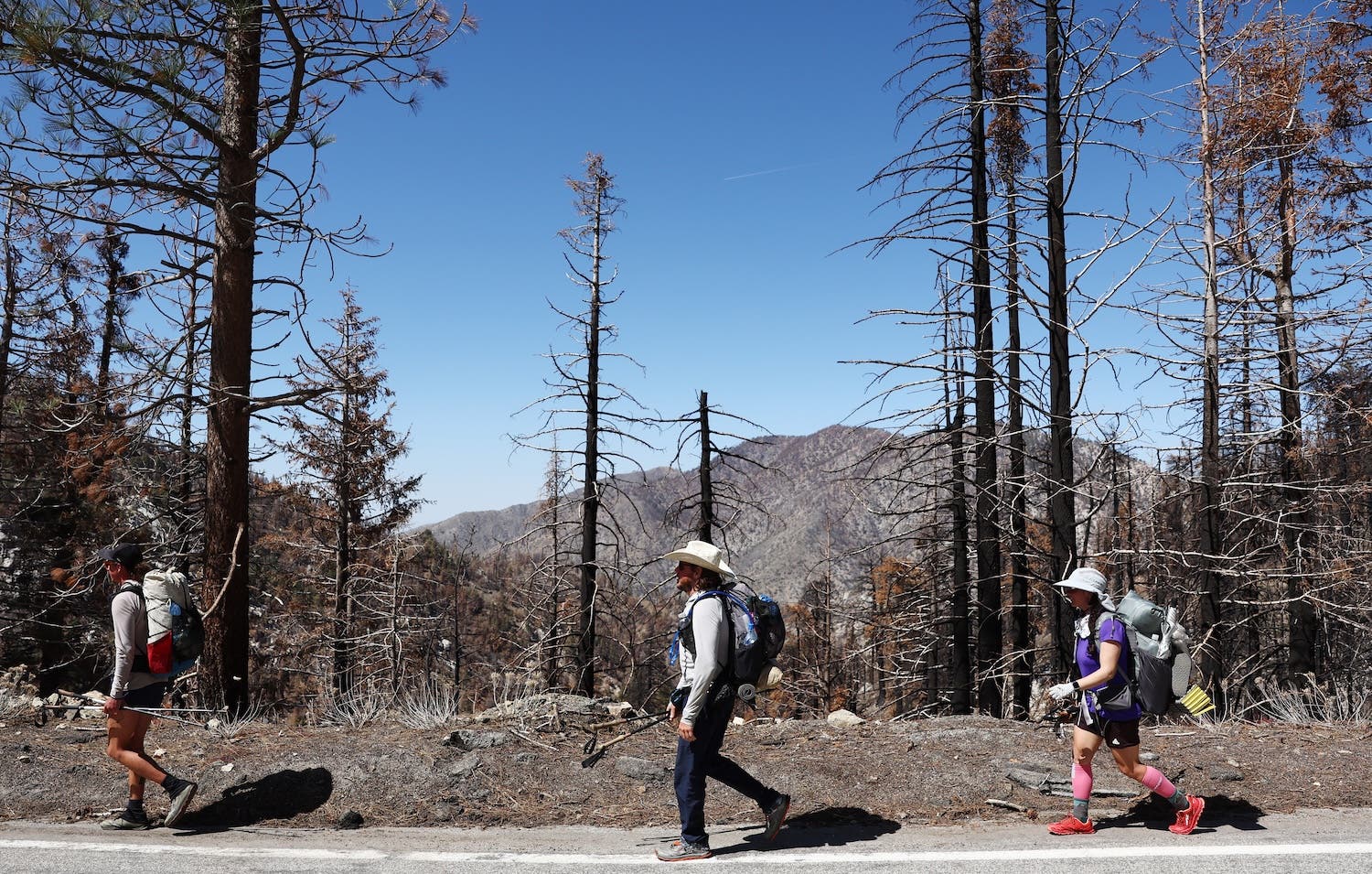
Wildfires Might Be Significantly Disruptive
It’s necessary to notice {that a} dry winter isn’t a assure of a nasty fireplace season. Spring and summer season precipitation can nonetheless add moisture to soil and vegetation, dampening the opportunity of mega-fires, particularly within the Pacific Northwest. However because it stands now, the stage is ready for prime wildfire threat throughout the area.
“If we view it as a recipe, we’re including in elements early within the season for the potential for a extra excessive and extended fireplace season,” Warbritton says of the circumstances in Oregon.
An early soften additionally provides the opportunity of earlier fires, which means fireplace season might overlap with backpacking season throughout a lot of the path.
“We’ve had these years the place it begins in June,” Reising says. “Northern California might expertise a few of that with the early soften and low snowpack this 12 months.”
The best way to Put together
Abby Smith, who begins her northbound PCT thru-hike on Could 5, is optimistic about circumstances on the path even when the hearth threat issues her.
“I’m not anticipating a lot snow,” Smith says. “I’ve an ice axe that I’m debating whether or not to ship to Kennedy Meadows South, and I really feel like there’s an opportunity that I don’t want one.”
For different hikers planning their journeys, listed below are some necessary suggestions for this mountain climbing season from a veteran PCT thru-hiker:


