

Image this case: You might be fifteen miles into the backcountry on the five-day backpacking journey of your goals. The path you might be following is sparse and intermittent, however you’ve been following a GPS observe in your telephone to assist help in navigation. You cease to eat lunch at a lovely alpine lake, and as you stoop over the lake to gather water for filtering, you hear a “plop!” You watch in disbelief because the telephone that solely seconds in the past was in your chest pocket slowly sinks its approach to the underside of the crystal-clear lake. Your telephone, and with it your technique of navigation, are gone straight away. Would you’ve got the data and abilities to proceed to navigate by means of advanced backcountry terrain with out assistance from a GPS system?
Nowadays, as individuals more and more change into reliant on expertise within the backcountry, the ability of studying maps and orienteering through a compass has change into considerably of a misplaced artform. To many it might appear superfluous, however having the data to learn and perceive maps is, on the very least, a enjoyable and fascinating skill-set to have for any passionate backcountry traveler; and it’s a ability that within the worst-case situation may assist prevent from a real emergency within the backcountry.
Whereas the various symbols and features of a topographic map could appear overwhelming and daunting at first look, with the appropriate data a map is a device that may paint an image of a third-dimensional panorama on a 2-dimensional floor. So for these intrepid explorers amongst us, be part of me as I take you thru a number of the fundamentals of studying maps that will help you acquire data and confidence to your subsequent backcountry journey.
Key Options of Topographic Maps
These options are what assist us paint an image of a panorama and permit us to calculate distance and elevation change.
Scale: Topographic maps often show a scale that signifies the ratio of map distance to real-world distance.
Contour Traces: The premise for understanding elevation, contour strains point out the form and steepness of the terrain.
Elevation Markers: Particular factors marked with their elevation in ft or meters, usually discovered alongside contour strains.
Symbols: Varied symbols on maps symbolize totally different options like roads, trails, water our bodies, and modifications in vegetation.
Studying Maps: Utilizing Map Scale to Calculate Distance
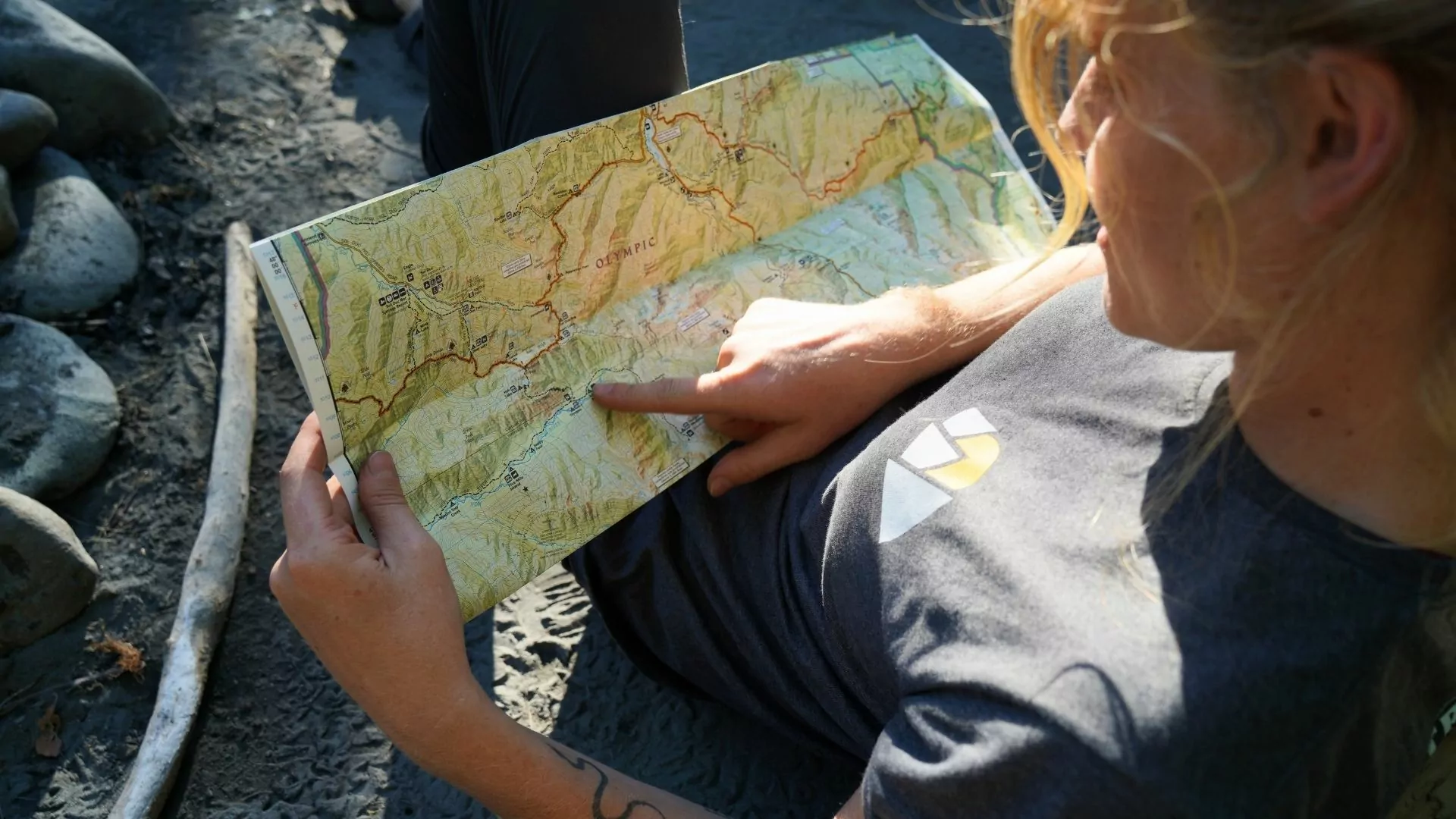
One of many first essential issues to find out when studying maps is the dimensions of the map. The commonest scale for an in depth topographic map within the U.S. is 1:24,000. Which means that every inch on the map represents 24,000 inches (or 2,000 ft) in real-world terrain. Map scales fluctuate and a map with a better scale ratio, say 1:50,000, usually covers a bigger space and is much less detailed than a map with a decrease scale ratio. That is essentially the most helpful and essential method of gauging distance whereas studying a map and is crucial to navigation. You should use the map scale to calculate mileage and in addition use it as a tough estimate to calculate tempo of journey.
Measuring Mileage
Hint Your Route: Use a chunk of string to observe the trail you propose to take, noting any bends and modifications in course.
Measure: As soon as the route is traced, measure the size of the string and examine it towards the map’s scale to find out the space.
Calculating Tempo of Journey
When you’re in a position to calculate mileage from a map, you’ll have the ability to estimate your tempo of journey and calculate estimated time of arrival to a vacation spot. Use these steps:
Estimate your mountain climbing pace by calculating the period of time it takes you to cowl one mile.
Evaluate the space you’ve got left to hike along with your calculated pace. For instance, in case you hiked one mile in 20 minutes (3 MPH tempo) and you’ve got 6 extra miles to hike, you’ll have the ability to estimate that you’ve two extra hours of mountain climbing on comparable terrain.
Essential: Pay attention to the kind of terrain you might be mountain climbing on; it should take longer to hike on steeper, rougher terrain than flat, even terrain.
Studying Maps: Utilizing Contour Traces to Calculate Elevation Change and Slope Angle
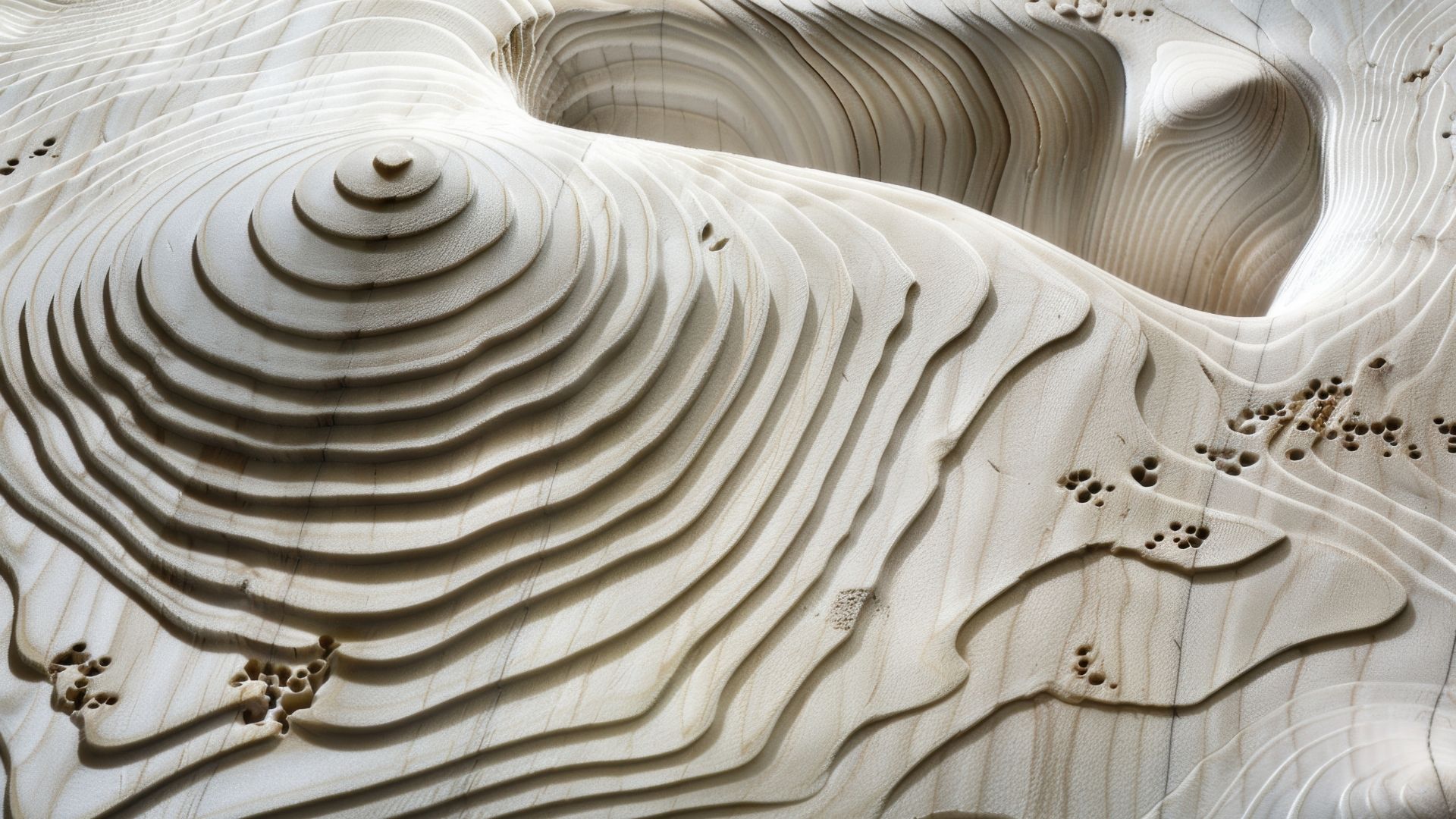
One key function of a topographic map is the presence of contour strains. Contour strains are strains on the map that point out modifications in elevation. Every line connects factors of equal elevation. The spacing between these strains signifies the steepness of the terrain; intently spaced strains point out steep slopes, whereas strains which might be farther aside counsel mild inclines.
Essential issues to notice when utilizing contour strains:
Contour Interval: That is the distinction in elevation between every contour line. Every map is totally different, however typical contour intervals are 20, 40, 50, or 100 ft and are usually indicated within the map legend.
Index strains: these are contour strains which might be barely bolder, usually one in each 5 strains, that may also present the precise elevation someplace alongside the road.
Calculating Elevation Change and Steepness
When you perceive how contour strains work, you possibly can put all of it collectively to calculate elevation change in your supposed route.
Calculate the elevation at your present location. Find the closest contour line to your location on the map and decide the elevation of that contour line.
Calculate the elevation at your vacation spot (say the highest of a mountain go that your route ascends) in the identical method.
Make sure you make observe of any variations in your route alongside the way in which. Simply because your trailhead and campsite are on the identical elevation doesn’t imply that there won’t be a variety of elevation change in between!
The steepness of a slope is indicated by the space between contour strains. A big open meadow could not have any contour strains, whereas a 1,000 foot rock face may have strains so shut collectively as to be nearly indistinguishable. On this method, contour strains are essential to recognizing important landmarks like valleys or mountains.
Studying Maps: Utilizing Map Legend to Assess Vegetation and Key Landmarks
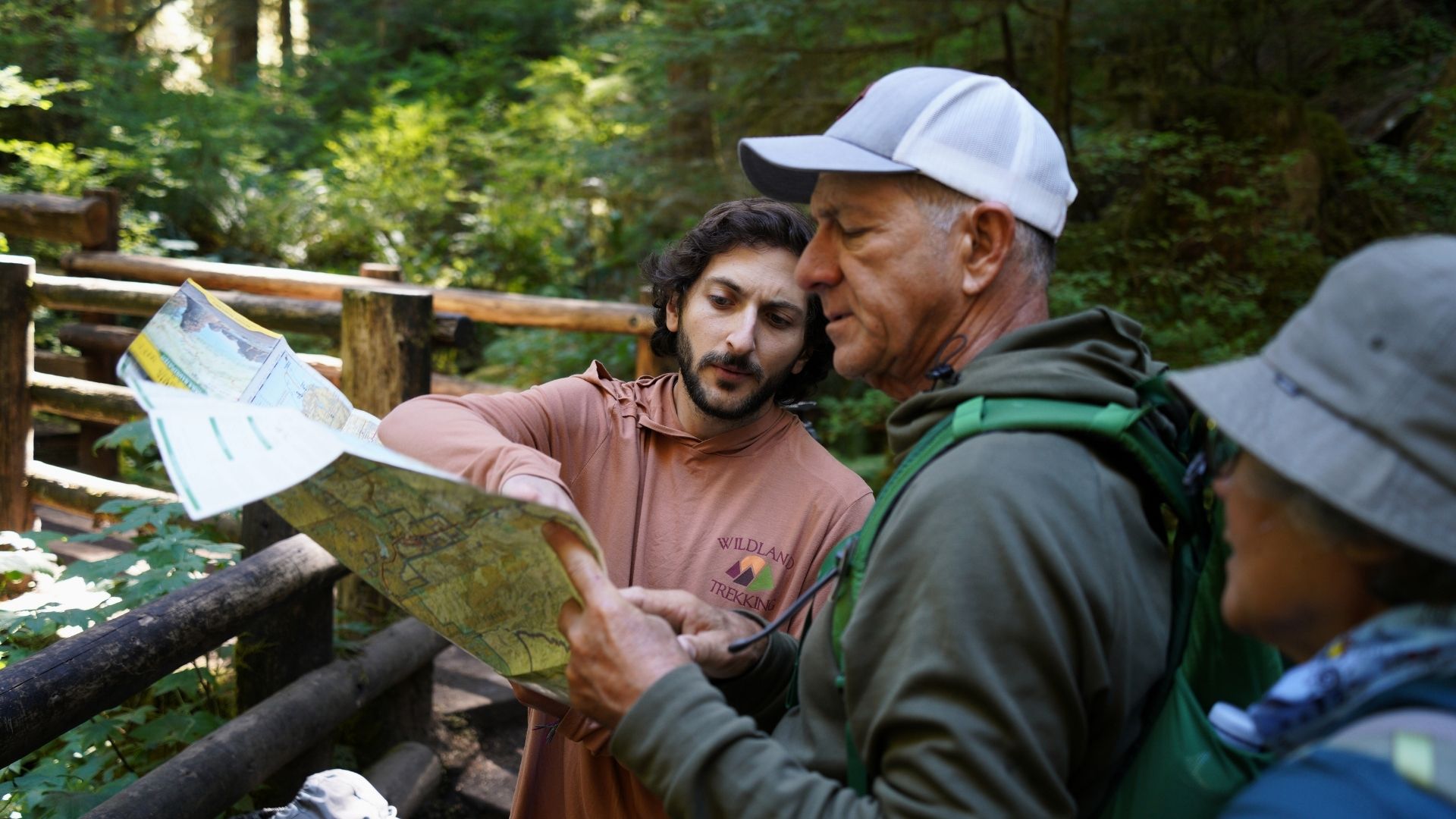
Probably the most essential instruments for studying maps is the map legend. You will need to familiarize your self with what every totally different line, image and colour means.
Figuring out the kind of tree cowl and vegetation is essential for planning and navigation. Inexperienced usually signifies forested areas, whereas shades can symbolize various kinds of cowl (e.g., deciduous vs. coniferous). Lighter or white signifies open areas, and blue often signifies water within the type of rivers, streams, lakes, and so on.
Utilizing this info may help you make choices in your path primarily based on potential visibility and ease of navigation.
Studying Maps: An Introduction to Compass Use
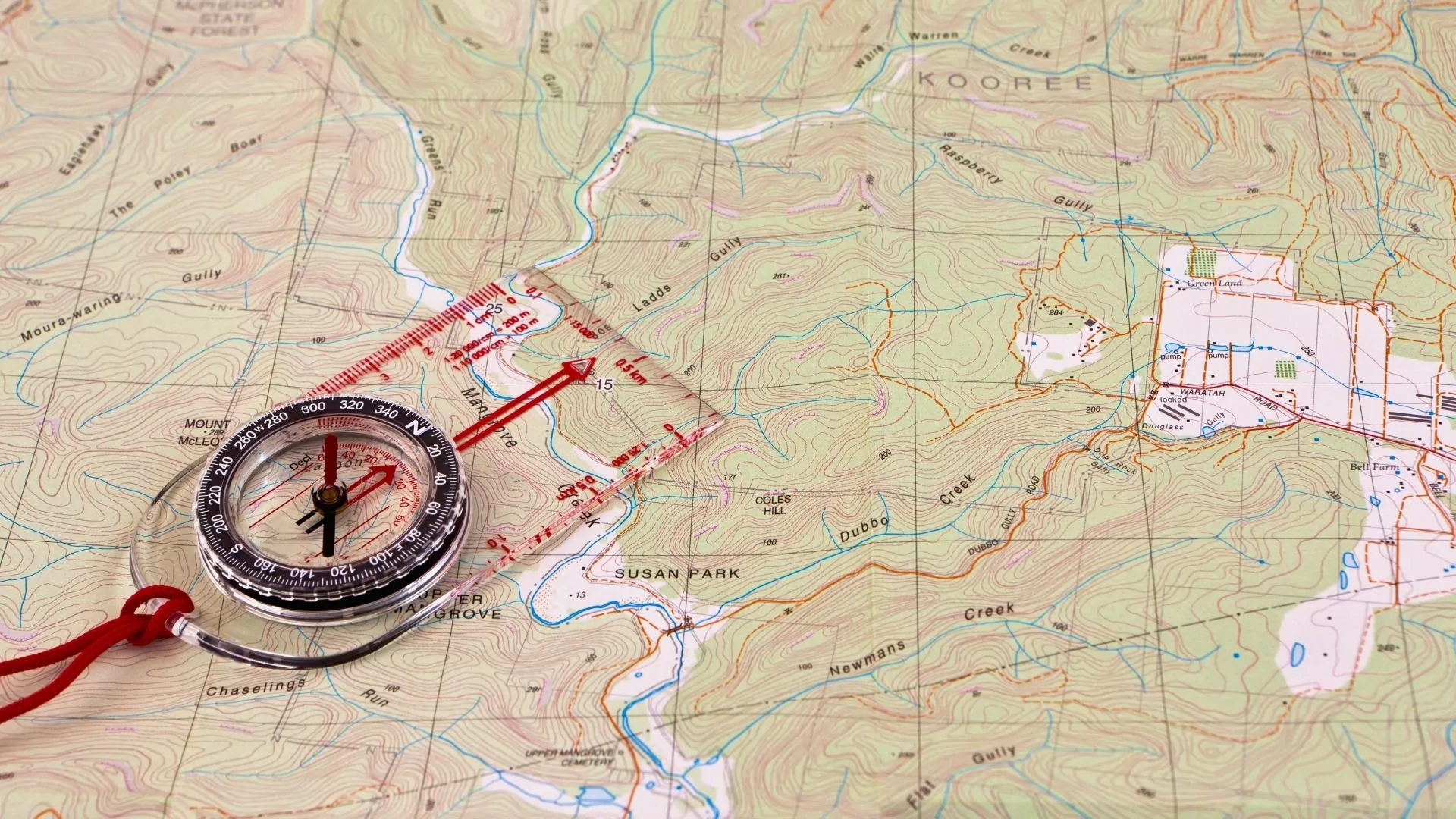
A compass is an important device for navigation, notably when utilized in tandem with a topographic map. Listed here are some primary steps to successfully use a compass:
Discover North: The compass needle will at all times level in direction of magnetic north. Figuring out this, you possibly can orient your map to align along with your environment.
Setting the Map: Lay your map flat and rotate it till the north on the map aligns with the compass needle pointing north. This course of is called ‘mapping’ or ‘orienting’ your map.
Taking Bearings: To navigate to a selected vacation spot, take a bearing by pointing the compass to your goal, then learn the angle displayed on the compass dial.
Combining Compass and Map
To successfully mix these instruments:
Observe a Bearing: Upon getting your bearing, stroll in that course whereas commonly checking the compass and adjusting as wanted because of terrain or obstacles.
Examine Landmarks: Utilizing all of the data you now have about studying maps, you’ll have the ability to determine seen landmarks (i.e. mountains, our bodies of water, forests, trails, and so on.) on the map and in actuality to make sure you are on the appropriate path.
Placing It All Collectively
Now that you realize the fundamentals of studying maps, you might be able to follow within the real-world! Get outdoors and follow in a protected surroundings first, ideally with an in depth map and compass. Studying and training is half the enjoyable and is an effective way to change into extra in tune along with your environment. With a bit of follow, you’ll be assured and prepared to your subsequent large journey. Pleased mountain climbing!
Go away Navitgation to a professional: E book A Guided Climbing Tour


