

At a Look: How you can Retailer Fuel Safely at House
Secure Storage {Hardware}: Use NATO-standard steel Jerry cans with hermetic gaskets to stop oxidation and moisture consumption.
Gasoline Chemistry: Stockpile Ethanol-Free (REC-90) gasoline combined with knowledgeable stabilizer like PRI-G for a 2-year shelf life.
Strategic Location: Retailer gas in a indifferent construction (shed or separate storage) not less than 50 ft from dwelling quarters and by no means in a basement or hooked up storage.
Oil worth hikes are a recurring symptom of worldwide instability, typically turning gas from a every day commodity right into a strategic vulnerability in a single day. In March 2026, this actuality hit house as WTI crude costs skyrocketed above $110 per barrel following the US-Israel-Iran battle and the following blockade of the Strait of Hormuz.
For a lot of, the ensuing surge on the pump was a “panic tax” on those that failed to organize. True safety means having a stabilized, 24-month provide purchased at yesterday’s costs. Beneath are the field-tested strategies you might want to construct a long-term usable gasoline reserve.
Bounce to:
3 Gasoline Storage MistakesWhat are the most effective containers for gasoline storageHow to Stabilize FuelIs storing gasoline at house authorized
The three-Layer Gasoline Protection System
Layer
Element
Objective
1. The Shell
NATO Metallic Jerry Can
100% Vapor-proof; prevents oxidation and “respiration.”
2. The Core
REC-90 (Ethanol-Free)
Eliminates section separation and inside moisture points.
3. The Guard
PRI-G Stabilizer
Chemically maintains gas shelf-life for twenty-four+ months.
3 Gasoline Storage Errors That Smash Most Fuel Reserves
Keep away from these three important errors to keep away from fireplace hazards:
Mistake 1: Storing gasoline in an hooked up storage or basement is a catastrophic danger. Vapors are heavier than air; they crawl alongside the ground towards water heaters and furnace pilot lights. Rule: If it shares a wall together with your sleeping quarters, it’s the incorrect place to retailer gas.
Mistake 2:Low cost, $15 pink plastic jugs are permeable, permitting high-octane vapors to flee whereas letting oxygen in. This results in fast oxidation and “plastic swelling” that ruins seals.
Mistake 3: Most individuals purchase commonplace E10 pump gasoline. As a result of ethanol is hygroscopic, which implies it pulls water from the humidity within the air. This results in Section Separation, the place a layer of water-sludge sinks to the underside, able to destroy your gas pump.
Why Does Customary E10 Gasoline Go Unhealthy So Shortly?
Customary E10 gasoline goes dangerous rapidly as a result of the ten% ethanol content material is hygroscopic, which implies it actively attracts and absorbs moisture from the air. Inside 30 to 90 days, this moisture causes a Section Separation and creates a extremely acidic, non-combustible sludge that corrodes gas traces, clogs carburetors, and prevents the engine from firing.
The 30-Day Clock: Not like pure gasoline, ethanol-blended gas begins to oxidize nearly instantly upon publicity to oxygen, resulting in the formation of “gum” and polish.
Hygroscopy Defined: Even in a “sealed” plastic container, temperature fluctuations trigger the can to vent. Because the can “breathes,” it pulls in humid air, which the ethanol then traps contained in the gas.
The “Engine Killer”: As soon as section separation happens, the remaining gasoline on prime loses its octane score, whereas the watery sludge on the backside is sucked into your engine, inflicting everlasting {hardware} injury.
What Are the Greatest Containers for Fuel Storage (Lengthy-Time period)?
One of the best containers for long-term gas storage are NATO-standard steel Jerry cans with a completely gasketed, cam-lock lid. Not like consumer-grade plastic jugs, high-quality steel cans (akin to these made by Wavian) are 100% vapor-proof and non-permeable, stopping the evaporation of risky compounds and the consumption of oxygen. For any gas reserve meant to final 24 months or longer, a Rezistol-lined steel container is a non-negotiable requirement to stop inside rust and exterior “respiration.”
The Gold Customary (NATO Metallic): These cans use a locking pin and a heavy-duty rubber gasket to create a real vacuum seal. This prevents the “respiration” cycle that introduces moisture into the gas.
Plastic Failure: Customary HDPE plastic cans are semi-permeable. Over time, essentially the most flamable components of the gasoline (the light-end hydrocarbons) leak by the plastic partitions, forsaking a “stale” gas with a decrease octane score.
Vapor Integrity: If you happen to can scent gasoline in your storage space, your container has failed. Knowledgeable-grade steel can eliminates the olfactory signature, preserving your gas secure and your storage web site stealthy and secure.
High 3 Fuel Storage Containers 2026
Listed here are three of the most effective containers for gasoline storage:
1. Wavian Genuine NATO Jerry Can
The Wavian NATO Jerry Can is the gold commonplace for long-term storage. Its Rezistol inside lining prevents the rust that always ruins commonplace steel cans over time. It’s the solely can designed to be 100% vapor-proof, preserving your storage secure and your gas’s octane score intact for years.
Professionals: 100% leak-proof in any place; internally lined to stop corrosion; manufactured to navy specs.
Cons: Highest value; heavy when full (approx. 45 lbs).
Specs: 0.9mm Metal; 5.3 Gallon (20L); NATO-spec bayonet closure; EPA/CARB/DOT permitted.
2. Eagle 2 Gallon Sort I Security Can
The Eagle 2 Gallon Sort I Security Can is a professional-grade, American-made metal container. It’s particularly designed for industrial security, that includes a seamless development that removes the chance of leaks on the base.
Professionals: Auto-venting lid prevents swelling; built-in flame arrester; galvanized metal resists exterior rust.
Cons: Spherical form is much less space-efficient than “slim” Jerry cans; 2-gallon capability requires extra models for a big reserve.
Specs: 24-Gauge Galvanized Metal; 2 Gallon; UL/ULC listed and FM permitted.
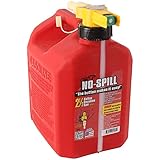
3. No-Spill 1450 Poly Can
For an reasonably priced however high-quality plastic possibility, the No-Spill 1450 is essentially the most dependable. It’s 70% thicker than a budget jugs at big-box shops and includes a patented thumb-button nozzle for exact management.
Professionals: Most reasonably priced; computerized move cease prevents overfilling; light-weight and straightforward to hold.
Cons: Plastic is semi-permeable (permits minor “respiration”); not really helpful for storage longer than 12 months.
Specs: Excessive-Density Polyethylene (HDPE); 5 Gallon; EPA, CARB, and CPSC compliant.


Final replace on 2026-03-10 / Affiliate hyperlinks / Photographs from Amazon Product Promoting API
How you can Stabilize Gasoline for two+ Years of Shelf Life?
To stabilize gas for two+ years of shelf life, you will need to cease oxidation and section separation earlier than they start. The trade commonplace for long-term storage is to combine a professional-grade thermal stabilizer (like PRI-G) into Ethanol-Free (REC-90) gasoline on the level of buy. This “at-the-pump” therapy ensures the additive is absolutely built-in into the gas’s molecular construction, making a chemical barrier in opposition to the moisture and oxygen that flip commonplace gasoline into unusable sludge inside 90 days.
The Stabilization Rule Most Individuals Miss
It’s essential to add your stabilizer to the empty Jerry can earlier than you pull the set off on the gasoline station. This ensures the incoming gas stress creates an ideal “vortex combine,” distributing the stabilizer evenly all through the 5-gallon quantity.
Product Breakdown: Whereas consumer-grade stabilizers (like commonplace Sta-Bil) are adequate for overwintering a lawnmower, 24-month storage requires PRI-G. It’s a refinery-grade therapy that forestalls the formation of “gum” and polish.
The REC-90 Hack: Each time attainable, pay the “ethanol-free premium” for REC-90 gasoline. Since ethanol is the first reason for moisture absorption, eradicating it’s the single handiest solution to assure your gas will ignite throughout a disaster.
Is Storing Fuel at House Authorized?
⚠️ SAFETY WARNING: FIRE CODE COMPLIANCE
Improper gas storage can void your house owner’s insurance coverage and pose a deadly danger to first responders. At all times seek the advice of your native Hearth Marshal for particular municipal ordinances.
NFPA 30 Requirements: The Nationwide Hearth Safety Affiliation typically limits residential storage to 25 gallons in an permitted space.
The Small Circle Protocol: In city environments, you will need to maintain your footprint tight. This protocol dictates that you just decentralize your stash. Break up your storage into two indifferent, ventilated places. This reduces the warmth signature and ensures a single accident would not eat your whole reserve.
Safe Your Fuel Reserve
Gasoline is the lifeblood of recent survival. Whether or not the following disruption is brought on by geopolitical battle, a pure catastrophe, or a easy financial spike, the distinction between a resilient family and a determined one comes down to 3 steel cans and a bottle of stabilizer. By following the 3-Layer Protocol, you are locking in power safety for your loved ones.
FAQ: How you can Retailer Fuel Safely
Q: How lengthy can I retailer gasoline at house earlier than it goes dangerous? A: Untreated E10 gasoline lasts 30–90 days. Handled Ethanol-Free (REC-90) gasoline in steel NATO cans can stay viable for 2 to three years.
Q: Are steel Jerry cans well worth the worth? A: Sure. A $15 plastic can will degrade and leak inside 2 years. A $80 Wavian NATO can will final a lifetime and protect gas that might in any other case spoil.
Q: Can I combine stabilized gasoline with previous gasoline? A: No. Including contemporary gasoline to “bitter” gasoline won’t repair the previous gas; it would solely speed up the degradation of the brand new gas.


