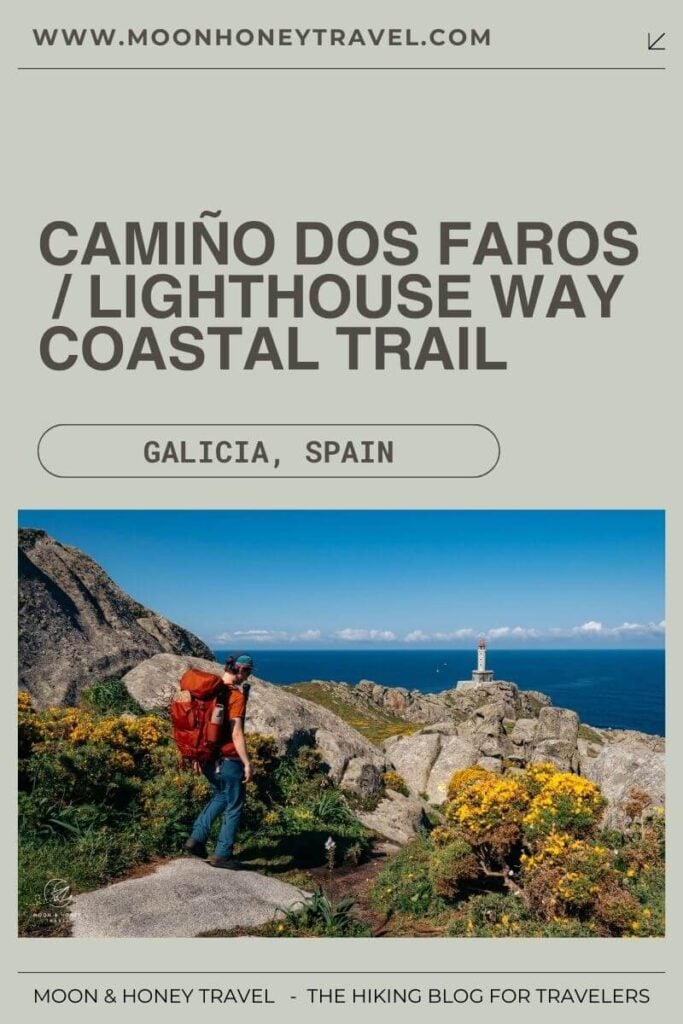
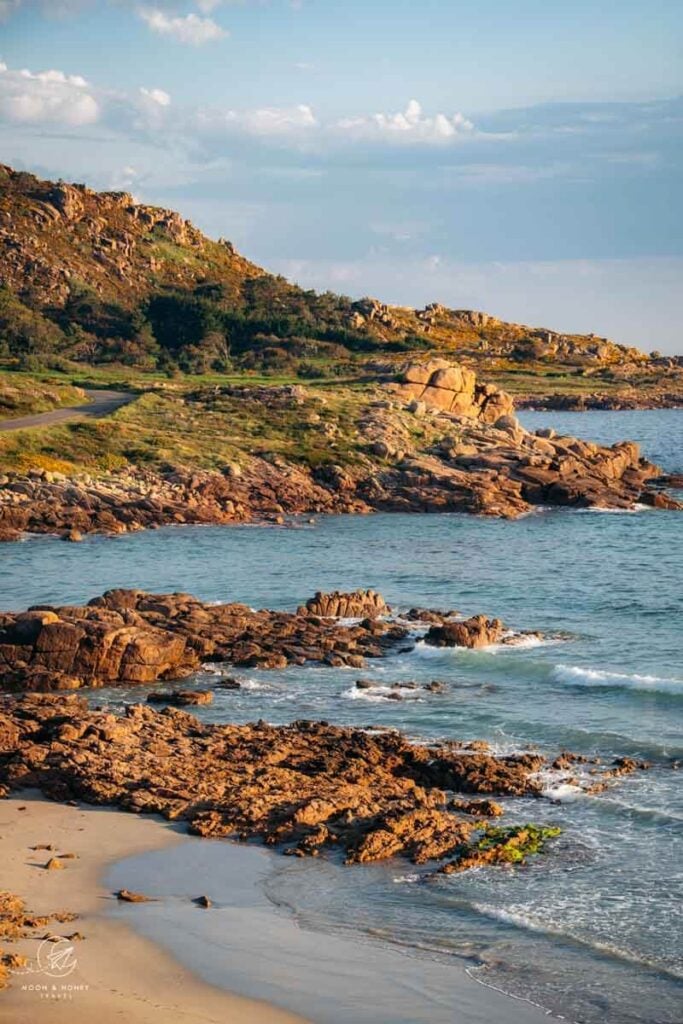
The Camiño dos Faros, or Lighthouse Method, is an exhilarating multi-day coastal trek in Galicia, Northern Spain. The path traces the distant Costa da Morte, or Coast of Demise, celebrated for its rugged magnificence and notorious for the numerous shipwrecks that impressed its title.
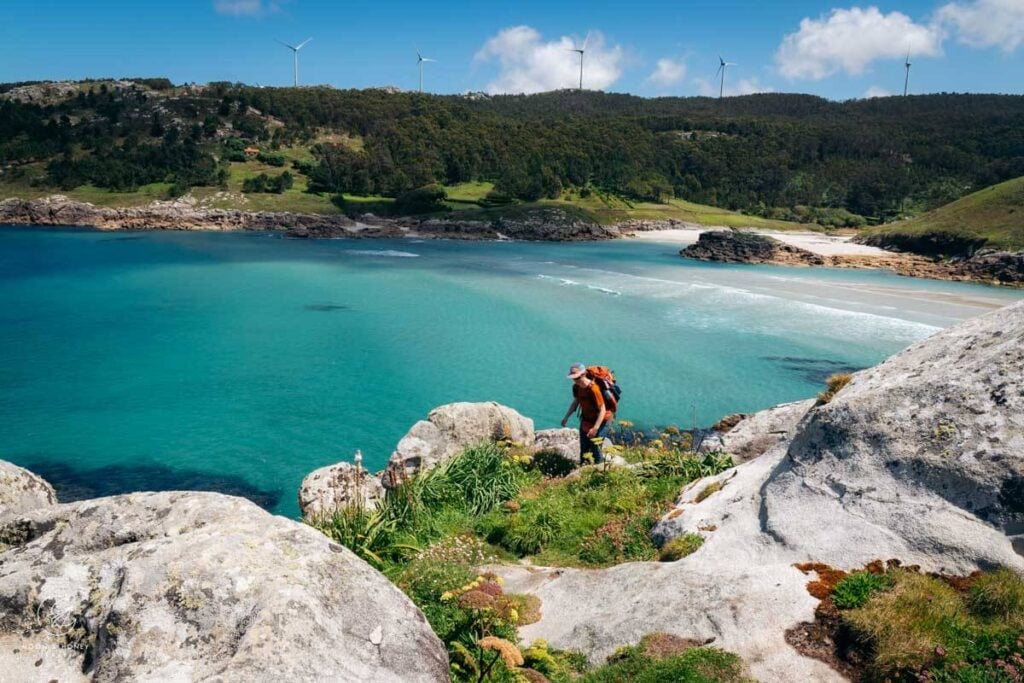
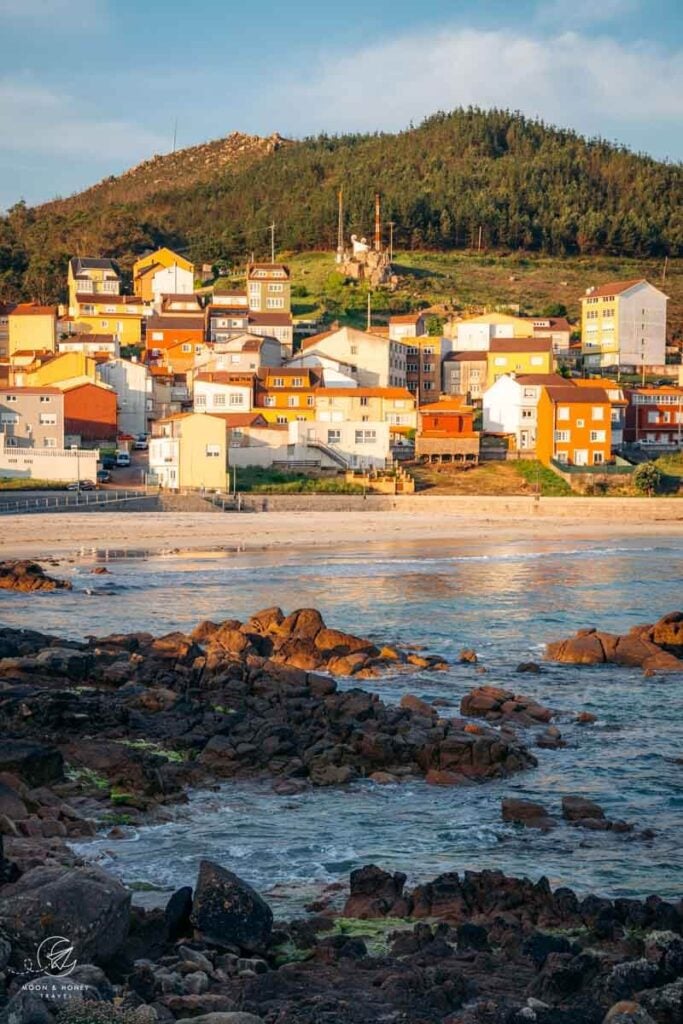
From Malpica to Finisterre, this village-to-village route leads hikers from lighthouse to lighthouse, throughout cliffs, boulders, sanddunes, forests, and seashores, hardly ever departing the coast. A lot of the Lighthouse Method follows slender footpaths nonetheless utilized by fisherman and percebes harvesters right this moment.
Divided into 8 phases, this 200-km path is hard, requiring a substantial amount of stamina. In case you method the Lighthouse Method with some flexibility (shortcuts and taxi assist), it may be much more manageable. In terms of climbing, I’m no purist; I consider each hiker ought to select what serves them finest.
I can’t suggest this coastal path extremely sufficient; it’s adventurous, comfortably reasonably priced, blissfully quiet, and unbelievably diverse. The primary drawbacks of the Lighthouse Method are its lengthy each day distances and the uncertainty surrounding its future.
Beginning Level: Malpica
Ending Level: Finisterre (Fisterra in Gallego)
Distance: 200 km
Time Wanted: 8 days
When to Hike: Late spring, or early autumn
Pilgrimage Route: Camiño dos Faros is just not a pilgrimage path, nevertheless hikers will intersect with pilgrims trekking the Camino Finisterre in Muxía, Lires, and Cape Finisterre (Cabo Fisterra). The ultimate two phases of every trek comply with parallel routes however don’t overlap.
Guidebook: Strolling the Camino dos Faros
Camiño dos Faros Historical past & Standing
Heads up: This part of the information is lengthy, however it’s important studying if you wish to perceive the present standing of the path.
A Love Letter to Galicia
The Camiño dos Faros was born from a daring concept: hint each rugged curve of Galicia’s Costa da Morte from Malpica to Fisterra fully alongside the seafront.
On December 7, 2012, six associates got down to forge this path throughout wind-battered cliffs, linking hidden coves and seashores with distant fishing villages. Their grassroots challenge grew to become a one-of-a-kind coastal path and a love letter to considered one of Spain’s wildest coastlines.
In 2013, these associates based the O Camiño dos Faros Affiliation, with the purpose of looking for GR accreditation with a purpose to formalize the route’s standing, promote the Coast of Demise as a sustainable vacation spot, enhance the path with GR waymarking, and defend the coast from potential threats (e.g. hypothesis).
Bureaucratic Nightmare
For 8 years, the affiliation labored diligently to certify the route, assembly and dealing with quite a few authorities companies and establishments:
9 municipalities
Provincial Council
Xunta de Galicia
Tourism of Galicia
CMAT (Cultural and Environmental Administration)
Xunta’s Setting Division
Galician Mountaineering Federation
State Coasts
Ports of Galicia
Port Authority of A Coruña
Regardless of the affiliation’s finest efforts, the challenge was thwarted by forms. In 2020, the group, annoyed and dissatisfied by a number of obstacles engineered by all these establishments and entities formally disassociated itself from the position of promoter of the path.
The yr earlier than, in 2019, the Camiño dos Faros affiliation submitted the Environmental Doc (Documento Ambiental) to Xunta de Galicia, as a part of the approval course of. Although the regulation requires a response from Xunta de Galicia inside 3 months, they didn’t get a response till 6 years later (March 2025).
In response to an article in Faro de Vigo, the Dirección Xeral de Patrimonio Pure mandates fifteen adjustments to the present path, particularly in protected pure areas and habitats of weak species.
Sadly, these path alternations would successfully destroy the Camiño dos Faros as we all know it (examine it right here). The actual fact is lots of the proposed adjustments are completely absurd. In some circumstances, the proposed adjustments would pressure hikers to skirt sure seashores, although swimmers, sunbathers, volleyball gamers, and different beachgoers face no such restrictions.
With authorities funding (e.g. boardwalks throughout sand dunes), there can be no have to re-route the path usually.
The Way forward for the Path
Kati and I hiked the Camiño dos Faros in Might 2025, unaware of this ongoing bureaucratic wrestle till a reader kindly despatched us this text printed in June 2025, asking us to advocate for the unique route. Sadly, we don’t have any affiliation with the O Camiño dos Faros Affiliation.
On this article from 2020, the Camiño dos Faros Affiliation wrote: “Though it’s not accredited, the route is, de facto, a public good and is so extensively promoted by society in any respect ranges that, even when we needed to, we couldn’t cease it.”
Just like the affiliation, I consider that the route will reside on. Nonetheless, it’s inconceivable to foretell what situation the path can be in a couple of years from now, provided that no group is answerable for its upkeep or signage. My recommendation is to hike it as quickly as attainable. And, please don’t try this path with out offline maps preloaded with GPX tracks.
Camiño dos Faros Problem
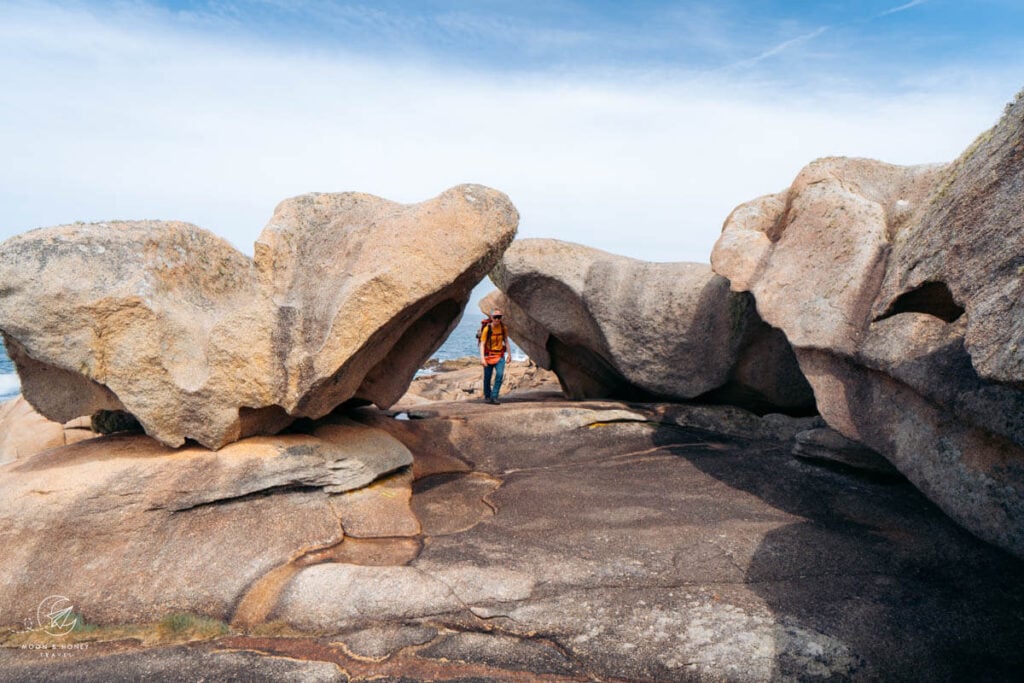
Camiño dos Faros is a tough long-distane path as a result of each day distances, the undulating nature of the trail, the terrain at instances, and the inconspicuous waymarking. Moreover, some official route phases are impractical, as they don’t finish at an lodging (extra on that later).
Navigation
The official coloration of the Camiño dos Faros is brilliant inexperienced, which, as you may count on, usually blends into the luxurious panorama. Inexperienced dots, arrows, and footprints mark timber, rocks, boulders, and pavement.
Though the path is well-marked, it’s nonetheless simple to lose your manner as a result of refined inexperienced waymarks. Downloading offline maps and GPX tracks for this path is important.
Every day Distances
Most days contain roughly 25 km of climbing. Nonetheless, some phases can be rather more than that. For instance, stage 6 from Camariñas to Muxía is 34.2 km by our calculation (32.6 km on the official web site).
Hikers can take a couple of shortcuts to cut back distances, and it’s all the time attainable to skip sure sections by taxi. Throughout our trek, we took two taxis to permit additional restoration time and skip a few of the extra tedious stretches alongside the estuaries.
Overgrown Areas
Some paths are overgrown with fern and gorse. In spring, the blooming gorse transforms the panorama into a shocking sea of yellow, making its prickly thorns virtually forgivable. However truthfully, these thorns are extraordinarily irritating. I’m glad I wore lengthy pants on daily basis.
Water
On some distant phases, there are not any water fountains, eateries, or retailers. You’ll have to supply water from streams and carry a filtration system. If that’s not an choice, plan to hold 3 liters per particular person on these distant phases.
Boulders
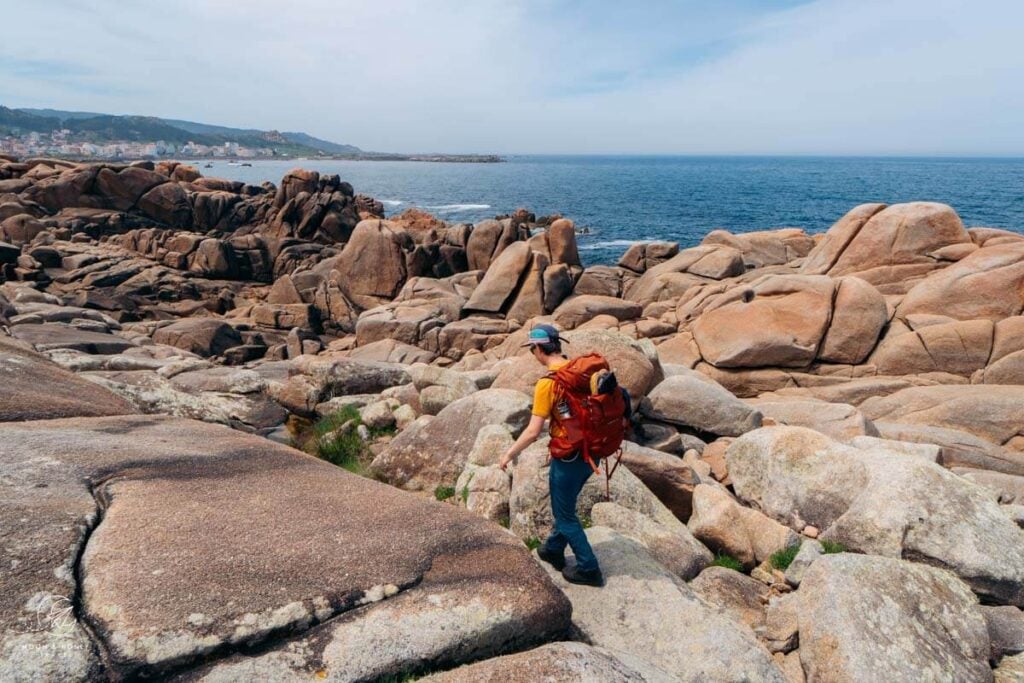
A lot of the Coast of Demise is strewn with granite boulders. Alongside the route, you’ll come throughout quite a few sections the place scrambling over rocks together with your arms is important. This provides pleasure to the path, but in addition will increase its issue.
Cumulative Elevation Acquire
Many phases function fixed ups and downs. Though this isn’t mountain climbing, it could possibly really feel prefer it, particularly on days with a cumulative elevation achieve of 755 meters (stage 6) and 900 meters (stage 7).
For these unaccustomed to a heavier pack, the undulating path may be powerful. It was for us. Whereas no single baggage switch service covers your entire route, it’s attainable to rearrange transfers for every stage. I’ll clarify how later.
Security
Mountain climbing this path felt very protected for us, as two hikers, as girls, and as a queer couple.
It’s essential to know that this path is distant and you’ll go lengthy stretches with out seeing anybody. Though many individuals hike this path solo, I wouldn’t really feel snug doing so: not as a result of it’s unsafe, however as a result of within the occasion of an accident, assist could possibly be far-off.
We didn’t encounter any aggressive canine alongside the path. There have been a couple of farm canine round Touriñán (stage 6), however they have been all the time accompanied by herdsmen.
Additionally, we didn’t come throughout any bothersome, horrifying, or unusually massive bugs.
Camiño dos Faros Route
Official Route
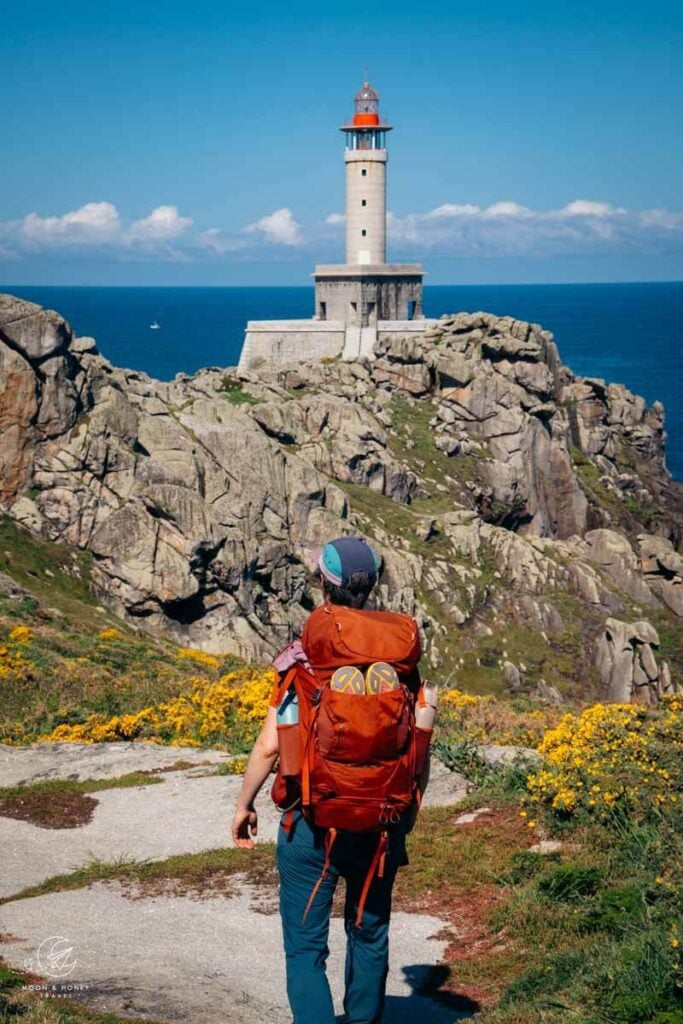
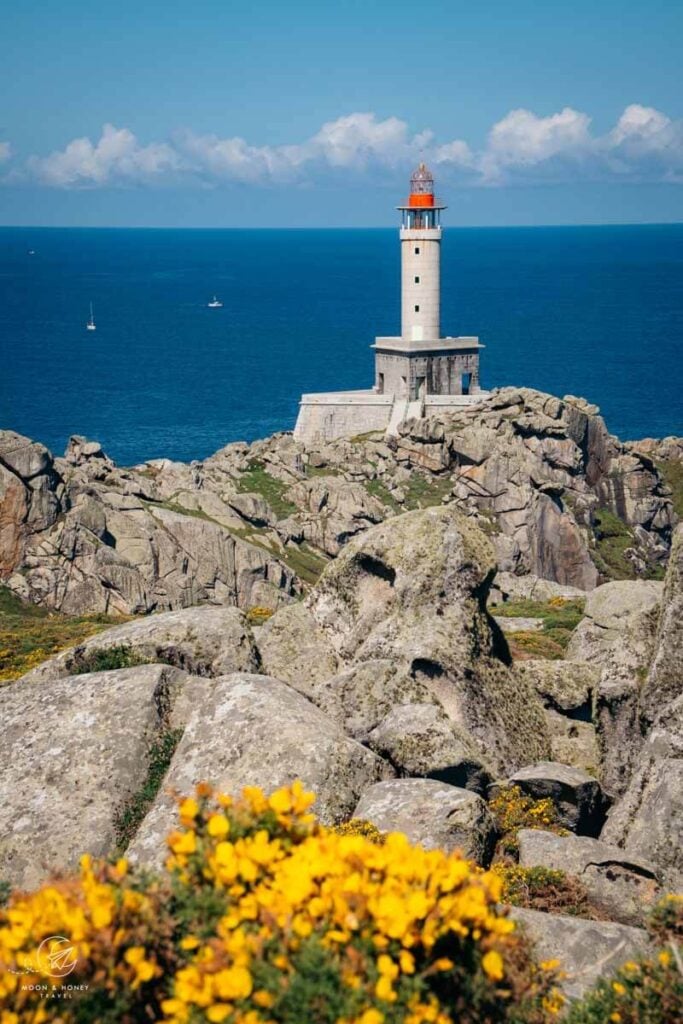
The official route is split into eight phases and is often hiked from Malpica to Cape Finisterre, touring northeast to southwest. In case you plan to hike your entire path with out shortcuts, I strongly suggest scheduling a relaxation day in Muxía on the very newest.
Stage 1: Malpica – Praia de Niñóns (21.3 km)
Stage 2: Praia de Niñóns – Ponteceso (27.1 km)
Stage 3: Ponteceso – Laxe (25.3 km)
Stage 4: Laxe – Arou (18 km)
Stage 5: Arou – Camariñas (23. 8 km)
Stage 6: Camariñas – Muxía (32.6 km)
Stage 7: Muxía – Praia de Nemiña (25. 3 km)
Stage 8: Praia de Nemiña – Cape Finisterre (26.9 km)
Our Lighthouse Method Route
In follow, it’s not possible to complete stage 1 in Praia de Niñóns, as there are not any close by lodging. We selected to finish stage 1 in Barizo as a substitute, which created a domino impact on phases 2 and three.
Phases 4 and 5 work effectively as designed. Stage 6 is a beast and regarded the least fascinating stage of all, so we lower it out fully. For stage 7, I feel it makes extra sense to finish in Lires, as there are extra lodging choices.
Stage 8 ends at Cape Finisterre, the place the one lodging choice is the expensive Lodge El Semáforo de Finisterre, which requires reserving effectively prematurely. For us, staying there felt like a becoming, ceremonial conclusion to the Lighthouse Method, however for a lot of hikers this gained’t be sensible given the resort’s restricted capability.
Attending to the Lighthouse Method Beginning Level: Malpica
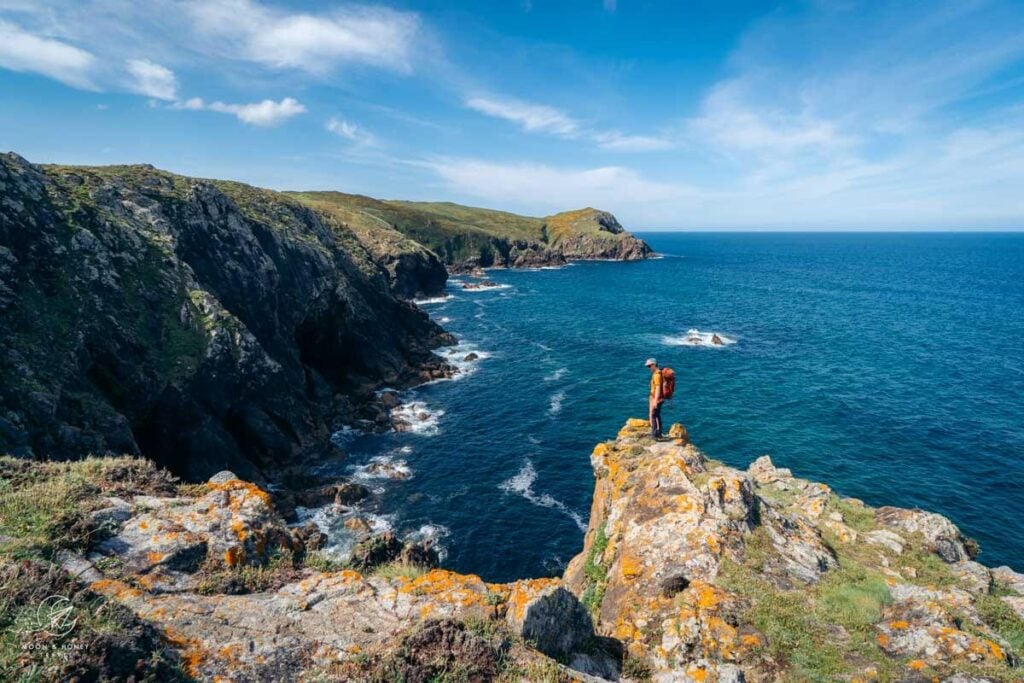
The official place to begin is Malpica, situated within the province of A Coruña within the autonomous area of Galicia in Northern Spain.
The closest airports to Malpica are A Coruña Airport and the Santiago-Rosalía de Castro Airport close to Santiago de Compostela.
Whereas A Coruña Airport is nearer to the place to begin, Santiago-Rosalía de Castro Airport is nearer to the top of the route. So, there’s no actual benefit to picking one over the opposite.
From the A Coruña Airport
In case you fly into the A Coruña Airport, there are two major methods to achieve Malpica:
Possibility 1 | Take three buses.
Take bus 4051/A4 from A Coruña Airport to Coruña E.A. (Estación de Autobuses)
Take a second bus from Coruña E.A. to Carballo
Take a 3rd bus from Carballo to Malpica (Malpica de Bergantiños)
Bus schedules are synced with Google Maps, however I like to recommend confirming timetables on bus.gal. As a result of there’s no direct line between Coruña E.A. and Malpica, make certain to pick “Con transbordo” beneath “Transbordos” within the journey planner.
The transit journey from Coruña E.A. to Malpica with a switch in Carballo takes round 3 hours.
Possibility 2 | E-book a non-public switch.
Kati booked us a non-public switch with sunny transfers from A Coruña Airport to our lodging in Malpica, and it was price each one of many 84 EUR we spent. The added consolation and comfort made the beginning of our journey much more gratifying and stress-free.
From the Santiago-Rosalía de Castro Airport
In case you fly into Santiago–Rosalía de Castro Airport, the identical two choices apply: public transit or a non-public switch. In case you go for transit:
Take bus line 6A from Santiago-Rosalía de Castro Airport to Santiago metropolis middle.
From Santiago, take a bus to Carballo.
From Carballo, take a neighborhood bus to Malpica (Malpica de Bergantiños).
Leaving Cape Finisterre
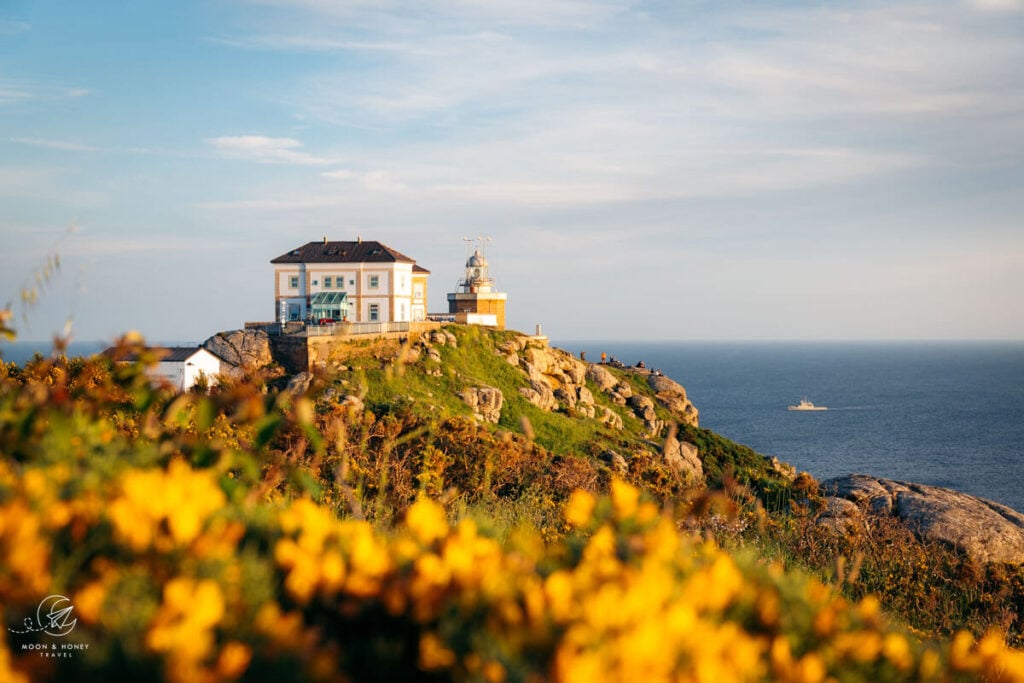
The Camiño dos Faros formally ends at Cape Finisterre, 3.2 km away from the village of Finisterre (Fisterra). After staying the night time in Lodge El Semáforo de Finisterre at Cape Finisterre, or in Fisterra, make your method to the Fisterra bus station (Google Maps).
From Fisterra village, there’s a direct bus to the Santiago de Compostela bus and practice station (Google Maps). In case you’re flying out of Santiago, hop on bus line 6A to the airport. In case you’re flying out of A Coruña, you possibly can both proceed your journey by bus, or by practice to Coruña.
Kati prebooked the bus to Santiago however didn’t reserve the practice to A Coruña. We ended up ready two hours for the subsequent practice with accessible seats.
In hindsight, I want we had booked a non-public switch from Cape Finisterre to our resort in A Coruña. As a substitute, we walked to Fisterra, took a bus to Santiago, then a practice to A Coruña, and eventually a taxi to our resort. A personal switch would have saved time and power, giving us extra alternative to discover A Coruña, a really vibrant and exquisite metropolis.
Accountable Mountain climbing
Wild Tenting | Wild tenting is just not formally allowed. Most of Galicia’s coastal areas are non-public land or protected pure zones, and native rules prohibit in a single day stays outdoors of designated campsites. There are only a few official campgrounds alongside the path, so I don’t suggest tenting. Lodging are plentiful and reasonably priced, making an inn-to-inn method the easiest way to hike this route.
Help Native Communities | Help native companies–cafés, guesthouses, retailers–fairly than relying solely on provides you carry.
Convey Two Reusable Water Bottles | The faucet water is protected to drink. Refill your water bottles at any time when attainable as a substitute of shopping for single-use plastic bottles. My favourite water bottle for climbing is SIGG – Protect ONE.
Keep on the Marked Path | A lot of the route traverses fragile coastal ecosystems. Keep away from creating new paths or reducing throughout vegetation.
Extra Hikes in Europe
Coastal Multi-Day Hikes:
Treks:
Mountain climbing in Spain: