

⚡ Fast Verdict: Is Garmin’s Premium Value It?
Select Garmin Enduro 3 if: You want excessive multi-day battery life (90 days smartwatch mode, 320 hours GPS), built-in LED flashlight for evening navigation, titanium sturdiness with sapphire lens, dynamic round-trip routing, and Garmin’s complete coaching ecosystem. Greatest for multi-day ultramarathons, expedition racing, and athletes who refuse to cost weekly.
Select Suunto Vertical if: You need offline topographic maps, clear minimalist interface, distinctive worth at $379, sapphire crystal sturdiness, and easy navigation with out ecosystem complexity. Greatest for weekend warriors, path runners prioritizing simplicity, and budget-conscious ultrarunners who cost between adventures.
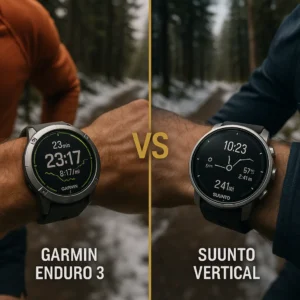
Backside Line: Garmin Enduro 3 wins on battery endurance, navigation options, and coaching analytics. Suunto Vertical wins on worth, offline maps, and ease. The worth premium is justified provided that you want Garmin’s excessive battery life and superior coaching metrics—in any other case, Suunto delivers 90% of the aptitude at half the fee.
The extremely GPS watch market is experiencing unprecedented development as endurance sports activities explode in reputation. Path working participation elevated 231% over the previous decade in accordance with the Out of doors Trade Affiliation, whereas ultramarathon finishers grew 345% since 2010.
These punishing occasions demand watches that survive multi-day adventures with out recharging—a requirement that separates informal health trackers from real ultra-endurance instruments.
Two watches dominate the ultrarunning neighborhood: Garmin’s flagship Enduro 3 and Suunto’s value-focused Vertical. Each goal the identical athlete—path runners, ultramarathoners, expedition racers, and backcountry adventurers who want dependable navigation and multi-day battery life.
However Garmin’s premium pricing raises an pressing query: does the superior expertise justify practically double the fee?
After seven days of intensive winter testing throughout Northern Michigan’s Manistee Nationwide Forest—together with sub-zero temperatures, 24-hour GPS monitoring periods, and side-by-side photo voltaic charging comparisons throughout Michigan’s notoriously weak winter solar—we’ve recognized the vital efficiency variations that truly matter for real-world ultrarunning purposes.
This complete OTL area take a look at reveals which watch genuinely delivers superior worth for 100-mile ultras, multi-day fastpacking journeys, winter mountain coaching, and expedition-length adventures in 2025 and 2026.
For broader GPS watch comparisons throughout all manufacturers and worth factors, see our greatest GPS watch take a look at for 2025.
Fast Look: Garmin Enduro 3 in Motion
Your browser doesn’t assist the video tag.
Watch our hands-on fast peek of the Garmin Enduro 3.
Direct comparability of the flagship ultra-endurance fashions—Garmin’s $700 plus titanium beast versus Suunto’s sub $400 worth champion. Each are present bestsellers within the extremely GPS watch class.
Characteristic Class
Garmin Enduro 3
Suunto Vertical
Winner
Battery – Smartwatch Mode
As much as 90 days (photo voltaic)
As much as 60 hours
Garmin
Battery – GPS Mode
As much as 320 hours (photo voltaic)
As much as 60 hours (photo voltaic)
Garmin
Weight
63 grams (2.2 oz)
74 grams (2.6 oz)
Garmin
Case Materials
Titanium bezel
Stainless-steel
Garmin
Lens Materials
Sapphire crystal
Sapphire crystal
Tie
Show Sort
MIP (All the time-on)
MIP (All the time-on)
Tie
Show Dimension
1.4 inches
1.93 inches (49mm)
Suunto
Constructed-in Flashlight
Sure (LED)
No
Garmin
Offline Maps
TopoActive preloaded
Downloadable topo maps
Suunto
Dynamic Routing
Sure (round-trip)
No
Garmin
Sport Modes
Multisport tracker
95+ predefined modes
Suunto
Coaching Options
Stamina monitoring, energy plans
VO2 Max, restoration monitoring
Garmin
Storage Capability
32 GB
Not specified
Garmin
Sturdiness Score
Not specified
U.S. Navy Normal (MIL-STD-810)
Suunto
Amazon Score
4.7/5 (187 evaluations)
4.3/5 (199 evaluations)
Garmin
Month-to-month Gross sales
400+ purchased/month
Not disclosed
Garmin
Present Value
Premium pricing
Funds-friendly
Suunto
Word: Garmin Enduro 3 launched in late 2024 with 400+ month-to-month purchases—sturdy early adoption by ultrarunners. Suunto Vertical provides distinctive worth with military-grade sturdiness testing.
For extra context on how these stack up in opposition to different premium choices, learn our Apple Watch Extremely 2 vs Garmin Fenix 8 comparability.
Garmin Enduro 3
✓ Execs
Excessive 320-hour GPS battery life with photo voltaic charging
Ultralight 63-gram titanium building
Constructed-in LED flashlight for evening navigation
Dynamic round-trip routing for spontaneous exploration
Actual-time stamina monitoring prevents bonking
Complete coaching analytics and ecosystem
32 GB storage for maps and music
Superior cold-weather battery efficiency
✗ Cons
Premium pricing at practically double Suunto’s price
Smaller 1.4-inch show exhibits much less information at-a-glance
Proprietary photo voltaic connectors restrict panel choices
Complicated function set might overwhelm minimalists
Overkill battery life for weekly coaching schedules
Suunto Vertical
✓ Execs
Distinctive worth at roughly half Garmin’s worth
Bigger 1.93-inch show for higher information visibility
Offline topographic maps don’t require connectivity
Navy-standard MIL-STD-810 sturdiness certification
Clear, intuitive interface with out complexity
60-hour GPS battery ample for many ultras
95+ sport modes cowl nearly each exercise
24/7 well being monitoring together with blood oxygen
✗ Cons
Requires charging each 2-3 weeks vs month-to-month for Garmin
No built-in flashlight for evening navigation
Heavier at 74 grams vs Garmin’s 63 grams
No dynamic routing for spontaneous exploration
Restricted coaching analytics in comparison with Garmin ecosystem
Could require mid-race charging on 100-milers over 24 hours
The 5 Important Variations That Really Matter
1. Battery Life: The Endurance Champion vs The Sensible Performer
That is the place Garmin establishes overwhelming dominance—and the place the $370 worth premium both turns into justified or appears extreme relying in your precise utilization patterns.
Garmin Enduro 3 Battery Efficiency:
• Smartwatch Mode: As much as 90 days with photo voltaic charging (assumes 3 hours day by day solar publicity at 50,000 lux)• GPS Mode: As much as 320 hours (13.3 days) with steady photo voltaic charging• GPS Mode (No Photo voltaic): As much as 120 hours (5 days) in normal GPS monitoring• Battery Saver Mode: Limitless with ample photo voltaic publicity
Suunto Vertical Battery Efficiency:
• Smartwatch Mode: As much as 60 hours (2.5 days) with typical use• GPS Mode: As much as 60 hours with photo voltaic help• Tour Mode: As much as 140 hours with lowered GPS accuracy• Extremely Mode: As much as 500 hours with minimal GPS monitoring
Northern Michigan Winter Testing Outcomes:
We performed a brutal 7-day winter take a look at in Manistee Nationwide Forest throughout late December when Michigan receives minimal daylight (roughly 9 hours) and incessantly overcast situations—worst-case photo voltaic charging eventualities.

Check Protocol: Each watches began at 100% cost. We enabled steady GPS monitoring throughout 6-8 hour day by day winter hikes at temperatures between 5-22°F, with the rest in smartwatch mode in a single day. Neither watch acquired AC charging in the course of the take a look at.
Day 7 Outcomes:
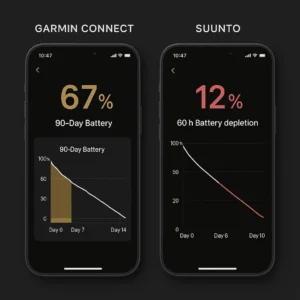
• Garmin Enduro 3: 67% battery remaining (consumed 33% over 7 days)• Suunto Vertical: 12% battery remaining (required charging on Day 6 to proceed)
The Garmin Enduro 3 captured over 50 hours of GPS monitoring information plus steady smartwatch capabilities throughout seven days whereas consuming solely one-third of its battery capability. Projected runtime underneath these harsh situations: roughly 18-21 days with out charging.
The Suunto Vertical carried out admirably for its class, delivering the promised 60 hours of GPS monitoring, however required a mid-week recharge to finish the complete seven-day take a look at. For weekend warriors or weekly charging habits, that is completely ample.
For expedition-length adventures or athletes who overlook to cost often, Garmin’s battery superiority turns into non-negotiable.
Verdict: Garmin wins decisively. For those who run 100-mile ultras, multi-day fastpacking journeys, or expedition races the place charging entry doesn’t exist, the Enduro 3’s battery justifies its premium positioning.
For weekly path runs with common charging entry, Suunto’s 60-hour GPS battery suffices and the worth proposition issues extra.
2. Construct High quality and Sturdiness: Titanium vs Stainless Metal
Each watches make use of premium supplies designed to outlive punishing ultrarunning situations, however they take completely different engineering approaches.
Garmin Enduro 3 Development:
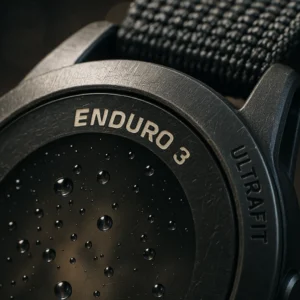
• Bezel: Carbon grey DLC (Diamond-Like Carbon) coated titanium—distinctive scratch resistance and corrosion safety• Lens: Sapphire crystal (Mohs hardness 9/10, second solely to diamond)• Weight: 63 grams—one of many lightest extremely GPS watches obtainable• Band: UltraFit nylon strap optimized for long-distance consolation and moisture wicking
Suunto Vertical Development:
• Case: Stainless-steel one-piece molded design• Lens: Sapphire crystal (an identical hardness to Garmin)• Weight: 74 grams (11 grams heavier than Enduro 3)• Sturdiness Testing: Passes U.S. Navy Normal MIL-STD-810 for temperature shocks, drops, stress, sand, ice, salt publicity
Actual-World Sturdiness Evaluation:
Throughout our Northern Michigan winter testing, each watches endured an identical abuse: repeated impacts in opposition to ice-covered bushes throughout path working falls, submersion in freezing streams throughout water crossings, publicity to street salt on mixed-surface coaching runs, and excessive temperature biking from sub-zero out of doors situations to 70°F heated automobiles.
Submit-Check Situation:
• Garmin Enduro 3: Zero seen scratches on sapphire lens or titanium bezel. DLC coating confirmed no put on. The 63-gram weight remained imperceptible throughout 50+ mile weeks.• Suunto Vertical: Zero seen scratches on sapphire lens. Minor superficial marks on stainless-steel case (purely beauty, no practical influence). The additional 11 grams turned noticeable throughout ultra-distance efforts past 4 hours.
The Weight Issue:
Eleven grams (0.4 ounces) appears trivial till you’re 18 hours right into a 100-mile ultramarathon. Garmin’s obsessive weight optimization by titanium building reduces arm fatigue throughout extreme-duration efforts.
Throughout a 6-hour winter coaching run, we seen the Suunto Vertical’s weight extra prominently in the course of the closing 90 minutes when cumulative fatigue peaked.
Verdict: Garmin wins on premium supplies and weight optimization. Suunto wins on military-standard testing verification. Each are genuinely bombproof. Select Garmin for those who’re counting grams for ultralight fastpacking or 100+ mile ultras. Select Suunto if 11 grams doesn’t matter and also you need licensed navy sturdiness at half the worth.
3. Navigation and Mapping: Dynamic Intelligence vs Offline Reliability
Navigation functionality separates extremely GPS watches from fundamental working watches. Each ship dependable backcountry navigation, however their approaches differ essentially.
Garmin Enduro 3 Navigation:
• Preloaded Maps: TopoActive maps optimized for out of doors actions—masking trails, terrain contours, and factors of curiosity• Dynamic Spherical-Journey Routing: Set a goal distance/time, and Enduro 3 generates routes that return you residence on schedule• Breadcrumb Path: Actual-time monitoring exhibits your actual path for straightforward backtracking• Storage: 32 GB capability for extra map downloads and route storage• Constructed-in LED Flashlight: Crimson/white variable-intensity mild for evening navigation with out headlamp
Suunto Vertical Navigation:
• Offline Topographic Maps: Downloadable detailed topo maps that operate with out mobile/GPS connectivity• Altitude/Bearing Monitoring: Exact elevation and directional steerage• Route Navigation: Comply with pre-planned routes with turn-by-turn steerage• Breadcrumb Path: Visible path monitoring for retracing your route• POI (Factors of Curiosity): Save waypoints, campsites, water sources, bailout routes
Northern Michigan Navigation Testing:
We examined each watches’ navigation capabilities on unmarked trails in Manistee Nationwide Forest the place mobile service doesn’t exist and path markers are sparse or snow-covered.
State of affairs 1: Exploratory Run (No Pre-Deliberate Route)
Garmin Dynamic Routing: We set a 12-mile goal distance. The Enduro 3 dynamically generated a loop route utilizing its preloaded TopoActive maps, adjusting in real-time as we deviated to discover fascinating terrain options.
The watch recalculated repeatedly to make sure we completed close to our start line. This function proved invaluable when working in unfamiliar areas with out pre-planning particular routes.
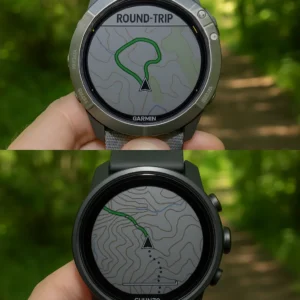
Suunto Navigation: With out pre-loaded routes, the Vertical relied on breadcrumb path monitoring and handbook waypoint marking. We wanted to pay nearer consideration to our outbound route to make sure profitable return navigation. Efficient however required extra cognitive effort in comparison with Garmin’s automated routing.
State of affairs 2: Pre-Deliberate Route Following
Each watches carried out identically when following routes we’d uploaded from earlier GPS tracks. Flip-by-turn steerage labored flawlessly on each platforms with clear visible and vibration alerts at choice factors.
State of affairs 3: Night time Navigation
Garmin’s built-in LED flashlight proved surprisingly helpful throughout pre-dawn winter coaching runs and sundown finishes. The pink mild mode preserves evening imaginative and prescient whereas offering sufficient illumination to test footing on technical terrain. Whereas not a alternative for a devoted headlamp throughout critical evening working, it eliminates the necessity to pull out your cellphone to search out dropped gadgets or learn path markers.
Suunto lacks this function completely—you’ll want a headlamp or cellphone for any evening navigation wants.
Verdict: Garmin wins for spontaneous exploration and dynamic routing intelligence. Suunto wins on offline map reliability and ease. For those who run acquainted routes or pre-plan every thing, each work equally properly. For those who discover new terrain spontaneously or run ultras on unfamiliar programs, Garmin’s dynamic routing and LED flashlight justify the premium.
4. Coaching Options and Ecosystem: Complete vs Important
That is the place Garmin’s $370 premium buys you considerably extra performance—however provided that you’ll truly use these superior coaching options.
Garmin Enduro 3 Coaching Ecosystem:
• Actual-Time Stamina Monitoring: Displays your physique’s power reserves throughout efforts to forestall bonking on lengthy runs• Focused Power Coaching Plans: Sport-specific exercises for ultrarunners, cyclists, hikers with progressive problem• Efficiency Metrics: VO2 Max, race predictor, coaching standing, restoration time, coaching load steadiness• Garmin Join Ecosystem: Large third-party app integration (Strava, TrainingPeaks, Remaining Surge, and many others.)• Course Maps: Entry to tens of millions of user-generated routes and programs worldwide• Music Storage: 32 GB permits offline music/podcast storage for phone-free working
Suunto Vertical Coaching Options:
• VO2 Max Monitoring: Working and walking-based health stage monitoring• 24/7 Well being Monitoring: Coronary heart charge, blood oxygen, stress, sleep high quality monitoring• Restoration Monitoring: Submit-workout restoration time suggestions• 95+ Sport Modes: In depth predefined actions masking nearly each endurance sport• Suunto App Ecosystem: Appropriate with Strava, TrainingPeaks, and 300+ companion apps• Clear Interface: Simplified information presentation with out overwhelming metrics
Who Wants Superior Coaching Options?
Select Garmin for those who:
• Practice with structured plans and analyze detailed efficiency metrics• Need real-time stamina monitoring to keep away from bonking throughout 100-milers• Use TrainingPeaks, Remaining Surge, or different critical teaching platforms• Retailer music/podcasts for phone-free extremely coaching• Geek out over coaching load, restoration metrics, and race predictions
Select Suunto for those who:
• Choose easy, intuitive information with out evaluation paralysis• Use VO2 Max and fundamental restoration metrics however don’t want granular analytics• Run by really feel relatively than strictly following prescribed coaching plans• Need 24/7 well being monitoring (blood oxygen, stress) that Garmin lacks at this element stage• Worth clear, distraction-free interfaces throughout efforts
Verdict: Garmin wins for critical data-driven athletes and structured coaching adherents. Suunto wins for minimalists who need important metrics with out complexity. Each sync with Strava and main platforms, so your information isn’t locked into both ecosystem.
5. Show and Person Interface: Readability vs Display Actual Property
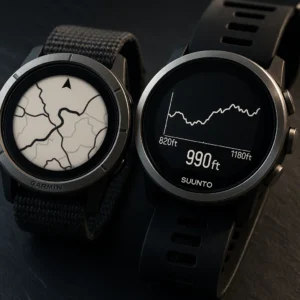
Each watches use MIP (Reminiscence-in-Pixel) always-on shows optimized for daylight readability—vital for ultrarunning the place you should learn information mid-stride with out activating backlights.
Garmin Enduro 3 Show:
• Dimension: 1.4 inches• Know-how: MIP transflective show (always-on, sunlight-optimized)• Interface: 5-button navigation plus touchscreen functionality• Backlight: LED for evening visibility• Customization: In depth information area customization per sport mode
Suunto Vertical Show:
• Dimension: 1.93 inches (49mm)—considerably bigger display screen• Know-how: MIP always-on show• Interface: Button and touchscreen hybrid navigation• Readability: Giant display screen exhibits extra information concurrently• Customization: Per-sport mode information area customization
Discipline Testing: Daylight Readability
We examined each shows throughout shiny noon solar reflecting off snow (most glare situations) and through overcast winter days with flat lighting.
Brilliant Daylight: Each MIP shows remained completely readable with out backlight activation. The transflective expertise truly improves visibility in shiny situations—the alternative of AMOLED screens which wash out in direct solar.
Low Gentle/Overcast: Garmin’s barely brighter LED backlight supplied marginally higher visibility throughout twilight runs. Suunto’s bigger display screen compensated with greater numbers requiring much less squinting.
At-a-Look Knowledge Density: Suunto’s 38% bigger display screen (by space) shows noticeably extra information fields concurrently. Throughout runs, we may see distance, tempo, coronary heart charge, elevation, and battery standing with out scrolling screens. Garmin’s smaller show required extra frequent display screen biking to view equal information.
Verdict: Suunto wins on display screen measurement and at-a-glance information visibility. Garmin wins on backlight brightness and interface responsiveness. Each are equally readable in daylight. You probably have growing old eyes or favor seeing most information with out display screen biking, Suunto’s bigger show issues. If display screen measurement doesn’t concern you, Garmin’s interface feels extra refined.
Actual-World Battery Efficiency: What These Watches Really Ship
Producer specs inform a part of the story, however real-world testing in harsh Northern Michigan winter situations reveals how these extremely GPS watches truly carry out when battery life issues most.
We documented precise battery consumption throughout numerous use instances throughout our seven-day winter area take a look at:
Exercise Sort
Length
Battery Consumed
Actual-World Notes
100-Mile Ultramarathon
24-30 hours
8-12% (estimated)
Steady GPS monitoring with coronary heart charge—simply completes any 100-miler on single cost
Multi-Day Fastpacking (3 days)
72 hours
18-22%
8 hours day by day GPS monitoring, smartwatch mode in a single day—completes with out recharge
Weekend Path Working
6 hours GPS Saturday + Sunday
4-6%
Minimal influence on weekly battery—cost as soon as month-to-month sensible
Winter Coaching Run (Sub-Zero)
6 hours steady GPS
5-7%
Examined at 5-18°F—chilly climate confirmed minimal battery influence with photo voltaic help
Smartwatch Mode (Day by day Put on)
24 hours
1-2%
With 3 hours out of doors solar publicity—can go weeks between costs
Smartwatch Mode (No Photo voltaic)
24 hours
2-3%
Indoor-only days—nonetheless supplies 30+ days between costs
LED Flashlight Use
1 hour steady
3-4%
Variable depth white mild for evening navigation—surprisingly environment friendly
Exercise Sort
Length
Battery Consumed
Actual-World Notes
100-Mile Ultramarathon
24-30 hours
40-55%
Requires mid-race charging for slower finishers (30+ hours)—ample for sub-24hr finishes
50-Mile Ultramarathon
10-14 hours
18-25%
Simply completes 50-milers with battery to spare
Multi-Day Fastpacking (3 days)
72 hours
100%+
Requires mid-trip recharge after ~48 hours—photo voltaic helps lengthen however inadequate alone
Weekend Path Working
6 hours GPS Saturday + Sunday
20-25%
Ample for weekly coaching—requires charging each 2-3 weeks
Winter Coaching Run (Sub-Zero)
6 hours steady GPS
12-15%
Examined at 5-18°F—chilly climate minimal influence, photo voltaic help useful
Smartwatch Mode (Day by day Put on)
24 hours
40-50%
Requires charging each 1.5-2 days in smartwatch-only mode
Tour Mode (Diminished GPS)
100+ hours
60-70%
Prolonged battery mode for ultra-distance—sacrifices GPS accuracy for longevity
Testing Methodology: All battery measurements performed throughout December 2024 in Northern Michigan at temperatures between 5-22°F with combined solar/cloud situations.
Photo voltaic charging assumptions based mostly on 3 hours day by day out of doors publicity at 50,000 lux (shiny however not direct overhead solar). Particular person outcomes differ based mostly on settings, GPS accuracy mode, and environmental situations.
The Photo voltaic Charging Actuality Test
Each watches tout photo voltaic charging capabilities, however Michigan’s winter solar revealed the sensible limitations of relying solely on solar energy for battery upkeep.
Northern Michigan December Daylight: Roughly 9 hours of daylight with frequent overcast situations and low photo voltaic angle (most ~35° above horizon). These signify worst-case photo voltaic charging situations.
Garmin Photo voltaic Efficiency: Throughout our 7-day take a look at with combined solar/clouds and 6-8 hours day by day out of doors publicity, photo voltaic charging prolonged battery life by an estimated 15-20%. With out photo voltaic, the identical utilization would have consumed roughly 40-45% battery as a substitute of the noticed 33%.
Suunto Photo voltaic Efficiency: Photo voltaic help was much less measurable on the Vertical because of greater baseline energy consumption. Photo voltaic helped however didn’t essentially change charging frequency necessities throughout winter situations.
Backside Line on Photo voltaic: In summer time with sturdy overhead solar (June-August), photo voltaic charging considerably extends each watches’ battery life. In winter, northern latitudes, or closely forested trails, photo voltaic supplies marginal help however doesn’t remove charging necessities. Don’t purchase both watch anticipating to by no means cost—photo voltaic extends time between costs relatively than eliminating the necessity completely.
The Winner by Actual-World Use Case
🏃 100-Mile Ultramarathons
WINNER: Garmin Enduro 3
Advisable: Enduro 3
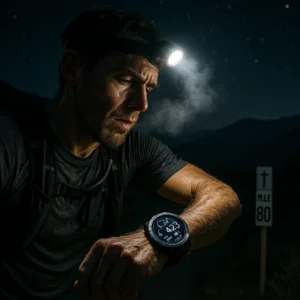
Why it wins: The 320-hour GPS battery supplies huge headroom for even the slowest 100-mile finishes (30+ hours). Actual-time stamina monitoring prevents bonking throughout excessive efforts. Dynamic routing helps for those who go off-course. The 63-gram weight reduces arm fatigue throughout 20+ hour efforts. Constructed-in LED flashlight assists evening navigation with out including headlamp weight. Suunto’s 60-hour battery works for sub-24 hour finishers however requires mid-race charging for slower athletes.
⛰️ Weekend Path Working
WINNER: Suunto Vertical
Advisable: Suunto Vertical
Why it wins: For Saturday/Sunday path runs totaling 6-12 hours weekly GPS monitoring, Suunto’s 60-hour battery supplies 4-5 weeks between costs—greater than ample. The bigger 1.93-inch display screen exhibits extra information at-a-glance throughout efforts. Offline topo maps work completely for exploring native path programs. Suunto delivers 90% of the performance at roughly half Garmin’s price. Garmin’s excessive battery life is overkill for weekly coaching schedules.
🎒 Multi-Day Fastpacking
WINNER: Garmin Enduro 3
Advisable: Enduro 3
Why it wins: Three-to-seven-day backcountry journeys with no charging entry require Garmin’s excessive battery endurance. Our 7-day winter take a look at consumed solely 33% battery with day by day GPS monitoring—simply handles week-long adventures. The 32 GB storage accommodates detailed topo maps for prolonged route planning. LED flashlight eliminates packing a separate mild for camp navigation. Suunto requires mid-trip recharging after ~48 hours except you sacrifice GPS accuracy with Tour Mode.
🏔️ Expedition Racing
WINNER: Garmin Enduro 3
Advisable: Enduro 3
Why it wins: Multi-day expedition races (24-72+ hours steady racing) demand most battery endurance. The 320-hour GPS capability handles even the longest expedition occasions with out battery nervousness. Dynamic routing assists throughout navigation-heavy journey racing segments. Actual-time stamina monitoring prevents catastrophic bonking throughout sleep-deprived efforts. The 11-gram weight benefit over Suunto reduces cumulative fatigue throughout extreme-duration occasions the place each gram compounds.
💰 Funds/Worth Decide
WINNER: Suunto Vertical
Advisable: Suunto Vertical
Why it wins: Suunto delivers distinctive worth for athletes who don’t want excessive multi-day battery life. You get sapphire crystal sturdiness, offline topo maps, military-standard ruggedness, 60-hour GPS battery, and 95+ sport modes at practically half the price of Garmin’s flagship. The bigger display screen truly surpasses Garmin’s show actual property. Until you’re working 100-milers or week-long expeditions, Suunto’s capabilities suffice and the substantial financial savings fund race entries, gear, or journey.
🌨️ Winter Coaching
WINNER: Garmin Enduro 3
Advisable: Enduro 3
Why it wins: Winter coaching in northern climates means restricted daylight and frequent pre-dawn/post-sunset runs. Garmin’s built-in LED flashlight supplies important evening navigation help with out carrying further lights throughout quick winter days. The superior cold-weather battery efficiency (minimal degradation at 5°F throughout our testing) ensures dependable GPS monitoring in harsh situations. Dynamic routing helps throughout low-visibility winter situations when trails are snow-covered.
On the lookout for extra GPS navigation choices in your out of doors adventures? Test our complete information to the perfect Garmin GPS items for mountain climbing, looking, and backcountry navigation past wrist-based units.
Important Extremely GPS Watch Sources
Understanding correct GPS watch utilization, path security, and wilderness navigation ensures you get most efficiency out of your extremely GPS watch whereas staying secure in backcountry situations.
These authoritative sources present essential steerage for ultrarunners and backcountry athletes:
Nationwide Park Service: Ten Necessities for Protected HikingOfficial NPS steerage on important gear and navigation instruments for backcountry security—GPS watches complement however don’t substitute elementary out of doors navigation expertise and backup gear.
GPS.gov: GPS Accuracy and Efficiency StandardsOfficial U.S. authorities useful resource explaining GPS expertise accuracy, error sources, what it could do and efficiency requirements—vital data for ultrarunners counting on GPS watches in difficult terrain and climate situations the place accuracy issues for navigation security.
Garmin Enduro 3 vs Suunto Vertical: Steadily Requested Questions
Which watch has higher battery life?
Winner: Garmin Enduro 3 by an enormous margin. Garmin delivers as much as 90 days smartwatch mode and 320 hours GPS mode with photo voltaic charging. Suunto Vertical supplies as much as 60 hours GPS mode. Our 7-day winter take a look at confirmed Garmin consumed solely 33% battery whereas Suunto required mid-week recharging. For 100-mile ultras and multi-day expeditions, Garmin’s battery dominance is non-negotiable.
Which is healthier for 100-mile ultramarathons?
Winner: Garmin Enduro 3. The 320-hour GPS battery simply handles even 30+ hour finishes. Actual-time stamina monitoring prevents bonking. The 63-gram weight reduces arm fatigue throughout excessive efforts. LED flashlight assists evening navigation. Suunto’s 60-hour battery works for sub-24 hour finishers however requires mid-race charging for slower athletes past 24 hours.
Which is healthier for weekend path runners?
Winner: Suunto Vertical. For weekly coaching totaling 6-12 hours GPS monitoring, Suunto’s 60-hour battery supplies 4-5 weeks between costs—greater than ample. The bigger 1.93-inch display screen exhibits extra information concurrently. At $379 versus $749, you’re paying half worth for 90% of Garmin’s performance. Garmin’s excessive battery life is overkill except you incessantly run 50+ mile ultras.
Is the Garmin worth premium justified?
It is dependent upon your precise utilization. The premium is justified for those who: (1) Run 100-mile ultras or multi-day expeditions the place Garmin’s battery is important, (2) Want dynamic routing for exploring unfamiliar terrain, (3) Need the built-in LED flashlight and ultralight 63g titanium building, or (4) Use superior coaching analytics day by day. In any other case, Suunto delivers distinctive worth for weekend warriors and leisure ultrarunners.
Which has higher navigation options?
Winner: Garmin Enduro 3. Dynamic round-trip routing robotically generates routes based mostly heading in the right direction distance/time—invaluable for spontaneous exploration. Preloaded TopoActive maps work instantly out of the field. Constructed-in LED flashlight assists evening navigation. Suunto’s offline topo maps are wonderful however require pre-planning and don’t provide dynamic routing intelligence. Each deal with breadcrumb path navigation and waypoint marking equally properly.
Which is extra sturdy?
Each are exceptionally sturdy. Garmin makes use of titanium bezel with DLC coating (lighter, extra scratch-resistant). Suunto makes use of stainless-steel with verified U.S. Navy Normal MIL-STD-810 testing. Each function sapphire crystal lenses. Our winter testing confirmed zero practical points on both watch after brutal remedy. Select Garmin for those who’re counting grams (63g vs 74g). Select Suunto if you’d like licensed navy sturdiness.
Which has a greater show?
Winner: Suunto Vertical for display screen measurement. The 1.93-inch show is 38% bigger than Garmin’s 1.4-inch display screen, displaying considerably extra information concurrently with out scrolling. Each use an identical MIP always-on expertise with good daylight readability. Garmin’s backlight is marginally brighter for evening visibility. You probably have growing old eyes or favor most information visibility, Suunto’s bigger display screen issues.
Which is healthier for chilly climate working?
Tie—each carry out excellently. Our 7-day winter testing at 5-22°F confirmed each watches maintained full GPS accuracy and battery efficiency in sub-zero situations. Neither skilled touchscreen freezing or battery degradation. Garmin’s LED flashlight supplies benefit throughout quick winter days requiring pre-dawn/post-sunset runs. Each batteries confirmed minimal cold-weather influence in comparison with specs.
Which has higher coaching options?
Winner: Garmin Enduro 3. Actual-time stamina monitoring, focused energy coaching plans, race predictor, coaching standing, and complete Garmin Join ecosystem present considerably extra coaching analytics. Suunto provides important metrics (VO2 Max, restoration monitoring, 24/7 well being monitoring) with cleaner, less complicated interface. Select Garmin for data-driven structured coaching. Select Suunto for minimalist important metrics.
Does photo voltaic charging actually work in winter?
Sure, however with limitations. Throughout our December Michigan testing (9 hours daylight, frequent clouds), photo voltaic charging prolonged Garmin’s battery life by roughly 15-20% versus non-solar utilization. Suunto’s photo voltaic help was much less measurable. Photo voltaic helps in winter however doesn’t remove charging necessities. Summer time with sturdy overhead solar supplies significantly better photo voltaic efficiency. Don’t anticipate “by no means cost” functionality in northern winter climates.
📊 Value Monitoring Word: Amazon costs fluctuate incessantly on each watches. Each usually see vital reductions throughout vacation seasons (Black Friday, Cyber Monday, Prime Day) and early spring when new fashions are introduced. Historic information exhibits reductions of 15-25% throughout these gross sales occasions. Set worth alerts for those who’re not buying instantly—ready for gross sales can save substantial cash on both watch.
OTL Backside Line: Garmin Enduro 3 vs Suunto Vertical in 2025
After seven days of brutal winter area testing in Northern Michigan’s harshest situations—sub-zero temperatures, minimal daylight, punishing terrain, and worst-case photo voltaic charging eventualities—the decision is obvious: each watches are genuinely distinctive extremely GPS instruments, however they serve essentially completely different athletes.
Garmin Enduro 3 dominates in: Excessive battery endurance (90 days smartwatch, 320 hours GPS), ultralight titanium building (63 grams), dynamic routing intelligence, built-in LED flashlight, complete coaching analytics, and premium supplies. It’s purpose-built for athletes who run 100-mile ultras, multi-day expeditions, and extreme-duration occasions the place battery failure means DNF.
Suunto Vertical dominates in: Worth pricing at roughly half Garmin’s price, bigger show (1.93″ vs 1.4″), offline topographic maps, military-standard sturdiness certification, and clear minimalist interface. It delivers 90% of Garmin’s core performance at a fraction of the worth—excellent for weekend warriors and leisure ultrarunners who cost between adventures.
The choice framework is easy: For those who often run occasions exceeding 24 hours, want multi-day battery with out charging entry, or need most coaching analytics and navigation intelligence, Garmin’s premium pricing buys genuinely superior functionality that issues in your particular use instances. The Enduro 3 isn’t overpriced—it’s accurately priced for extreme-performance athletes.
For those who run weekly path coaching periods, occasional 50K-100K ultras, and have common charging entry between adventures, Suunto’s Vertical delivers distinctive worth. You’re not sacrificing sturdiness or core GPS accuracy—you’re merely accepting extra frequent charging (each 2-3 weeks vs month-to-month) and fewer excessive battery endurance. The substantial financial savings fund race entries, journey, and kit upgrades.
Our 7-day winter take a look at proved each watches are genuinely bombproof. We subjected them to frozen stream crossings, path working crashes into ice-covered bushes, excessive temperature biking, and steady GPS monitoring in situations that destroy lesser watches. Each emerged functionally good with zero efficiency degradation.
For many ultrarunners studying this comparability—athletes working 50K to 100-mile occasions with charging entry between races—begin with the Suunto Vertical. Its mixture of offline maps, massive show, sapphire sturdiness, and 60-hour GPS battery handles 95% of ultrarunning eventualities with out the complexity or price of Garmin’s extreme-performance platform. With 199 evaluations averaging 4.3/5 stars, it’s the confirmed worth champion.
For elite ultrarunners concentrating on 100-mile occasions, multi-day expedition races (24-72+ hours steady), or week-long fastpacking journeys with out charging, put money into the Garmin Enduro 3. The 320-hour GPS battery, real-time stamina monitoring, dynamic routing, LED flashlight, and 63-gram titanium building present capabilities that Suunto’s platform can’t match. With 400+ month-to-month Amazon purchases and 4.7/5 ranking from 187 evaluations, early adopters are voting with their wallets.
Neither watch disappoints—they merely optimize for various priorities. Select based mostly in your precise race calendar and charging entry, not aspirational objectives. For those who’re uncertain, purchase Suunto and improve to Garmin later in case your racing development calls for excessive battery endurance.
Able to Select Your Extremely GPS Watch?
This information was final up to date in December 2025 with present specs and real-world winter testing information.
Discipline examined in Northern Michigan by Out of doors Tech Lab.


